
From FDA to EU MDR: A Comprehensive Compliance Guide for Medical Compression Socks Entering the US and European Markets

Medical compression socks have evolved from niche clinical accessories into high-demand medical devices, widely used for post-surgery recovery, venous insufficiency management, workplace fatigue relief, and sports rehabilitation across global markets. As consumer and clinical demand surges in the United States and European Union—two of the world’s most regulated and profitable medical device markets—manufacturers and brand owners face stringent, distinct regulatory barriers. Non-compliance often leads to customs detention, product recalls, market withdrawal, and costly financial losses. This comprehensive guide demystifies core FDA and EU MDR compliance rules for medical compression socks, clarifies key regulatory differences, and delivers actionable strategies to streamline your cross-border market entry and sustain long-term brand competitiveness.
Understanding Regulatory Classification: The Foundation of All Compliance
The first step to seamless market access is accurate product classification, as both the US FDA and EU MDR regulate medical compression socks based on compression pressure levels and intended medical use, setting clear boundaries from ordinary athletic or daily wear socks.
In the US FDA framework, medical compression socks are categorized as Class I or Class II medical devices, determined by their compression strength and clinical application. Low-pressure compression socks (below 20 mmHg) with basic fatigue relief functions fall under Class I, eligible for general control exemptions with simplified registration procedures. Medium to high-pressure medical compression socks (20 mmHg and above) designed for clinical treatment and venous disorder management are classified as Class II devices, mandating strict pre-market verification via the 510(k) clearance pathway. All legally marketed products require complete manufacturer registration, product listing, and adherence to FDA’s Quality System Regulation (QSR), now aligned with ISO 13485 quality management standards to ensure consistent production quality.
Under the EU MDR (2017/745), all medical-grade compression socks are strictly regulated medical devices, regardless of pressure range. Unlike the FDA’s dual-classification model, the EU classifies most medical compression socks as low-to-medium risk devices subject to rigorous conformity assessment. Core mandatory requirements include CE marking certification, full compliance with Annex I General Safety and Performance Requirements (GSPRs), standardized technical documentation, and valid biocompatibility testing per ISO 10993. Notably, EU MDR eliminates the simplified loopholes of the old MDD directive, requiring third-party Notified Body verification for high-risk compression products and mandatory registration in the EUDAMED database with unique UDI marking for full product traceability across all EU member states.
Core Compliance Requirements: FDA vs. EU MDR Key Differences
While both regulatory systems prioritize product safety and clinical effectiveness, their compliance pathways, documentation standards, and post-market obligations differ significantly. Mastering these distinctions helps brands avoid redundant testing, shorten certification cycles, and reduce cross-border operational costs.
1. Pre-Market Approval Pathways
The US FDA adopts a market-equivalence verification mechanism. For Class II medical compression socks, manufacturers must submit a 510(k) application to prove substantial equivalence to legally marketed predicate devices, with an average approval cycle of 6–12 months. Class I exempt products only need basic registration and listing without pre-market review, enabling faster preliminary market entry.
EU MDR enforces stricter pre-market scrutiny with no blanket exemptions for medical compression socks. Brands must complete comprehensive clinical evaluation reports (CER), full technical document compilation (covering design specifications, risk analysis, test data, and benefit-risk assessment), and in most cases, Notified Body audit and certification. The complete MDR compliance cycle typically takes 12–18 months, supporting market access to all 27 EU member states and most European economic zones with a single CE mark.
2. Mandatory Testing & Quality Standards
Both markets mandate adherence to international authoritative standards, with targeted differentiated requirements. Both require ISO 13485-certified quality management systems for manufacturing facilities, ensuring standardized production processes. For product safety, ISO 10993 biocompatibility testing is mandatory for both FDA and MDR compliance to rule out skin irritation, cytotoxicity, and sensitization risks from long-term skin contact.
EU MDR adds exclusive regional requirements, including compliance with RAL-GZ 387 medical compression sock quality standards recognized in Germany and other core EU markets, as well as multilingual labeling and packaging specifications to meet regional regulatory norms. The FDA focuses more on compression accuracy, performance stability, and labeling claim authenticity, prohibiting exaggerated medical efficacy descriptions in marketing and product instructions.
3. Post-Market Supervision & Traceability
Post-market compliance is a critical long-term obligation for cross-border brands. The FDA requires annual manufacturer registration renewal, regular product quality monitoring, and mandatory adverse event reporting for any product safety incidents. The US UDI system demands clear product identification on packaging for market circulation traceability.
EU MDR raises the bar for post-market supervision, imposing mandatory post-market surveillance (PMS) plans and periodic clinical evaluation updates. All products must be registered in the EUDAMED database with complete UDI marking throughout the supply chain. Brands must conduct regular market performance reviews, update technical documents timely, and respond rapidly to non-conformity issues to avoid forced market removal.
Common Compliance Pitfalls to Avoid
Many manufacturers encounter unnecessary market entry obstacles due to insufficient understanding of dual regulatory rules. The most prevalent mistake is confusing daily athletic compression socks with medical compression socks—ordinary compression socks only meet consumer commodity standards and cannot carry medical efficacy claims, while medical-grade products must complete full FDA or MDR compliance certification.
Another common error is assuming FDA approval covers EU market access. In fact, FDA and EU MDR certification systems are mutually independent. FDA-approved products still need complete MDR conformity assessment and CE marking for EU sales, and vice versa. Additionally, incomplete technical documentation, non-compliant labeling, expired ISO 13485 certification, and missing clinical evaluation data are top reasons for MDR audit failures and FDA customs rejections.
Strategic Benefits of Dual FDA & MDR Compliance
Investing in dual FDA and EU MDR compliance is not merely a regulatory obligation but a core strategic advantage for brand globalization. First, dual certification unlocks access to the world’s two largest medical device markets, covering over 60% of global medical compression sock consumption demand and laying a foundation for rapid revenue growth.
Second, standardized compliance systems elevate product credibility and brand professionalism. FDA and MDR certifications serve as authoritative third-party endorsements for product safety, compression accuracy, and clinical effectiveness, helping brands stand out in fierce market competition, gain trust from hospitals, clinics, medical distributors, and end consumers, and support premium product positioning.
Third, systematic compliance management reduces long-term operational risks. Standardized production, complete documentation, and standardized post-market supervision effectively avoid customs detention, product recalls, and regulatory penalties, ensuring stable and sustainable cross-border business operation. Moreover, dual compliance experience optimizes internal production and quality control systems, driving overall enterprise upgrading.
Final Thoughts: Streamline Global Expansion with Professional Compliance
The global medical compression sock market continues to expand, driven by rising awareness of venous health care and growing demand for clinical rehabilitation. While FDA and EU MDR regulatory rules are rigorous and complex, systematic compliance planning and standardized operation can effectively break market barriers.
For medical compression sock manufacturers and brands aiming to go global, accurate classification, complete pre-market certification, standardized quality control, and sustained post-market compliance are the keys to long-term success. By aligning with both US and EU regulatory requirements, you can not only achieve seamless entry into mainstream global markets but also build irreplicable brand competitiveness, capturing more market share in the booming global medical compression therapy industry.
 What does 30-40 mmHg compression mean?
  What is the difference between 15-20 and 20-30 mmHg?
  Which Compression Class Should I Choose?
  What Compression Level Is Best for Varicose Veins?
  Best Compression Socks for Varicose Veins:20-30 mmHg Guide
  Support Socks for Varicose Veins-How Do They Help?
  Do Compression Stockings Reduce Varicose Veins?
 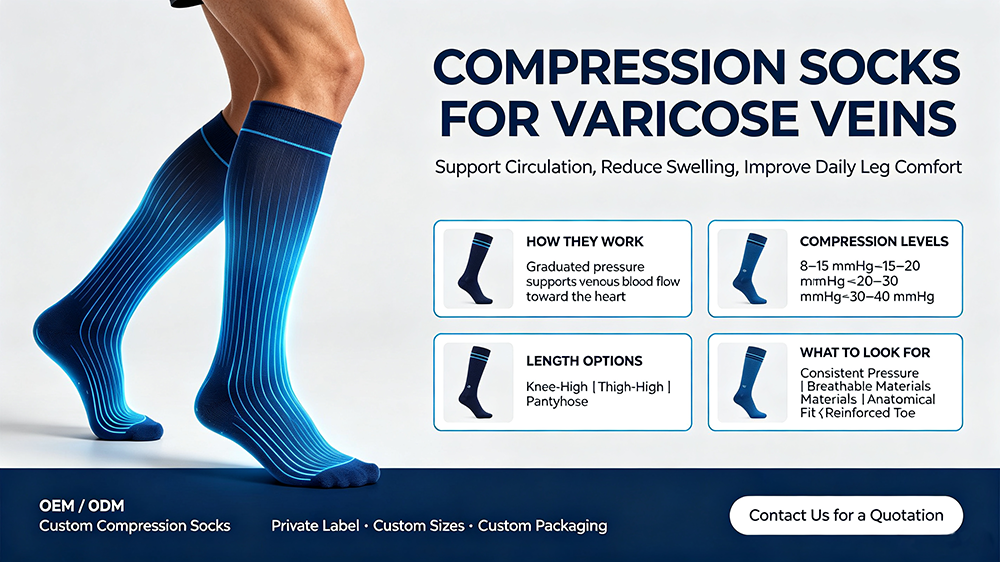 Do Compression Socks Help Varicose Veins?
  TED Anti-Embolic Stocking Sizing and Measurement Guide
 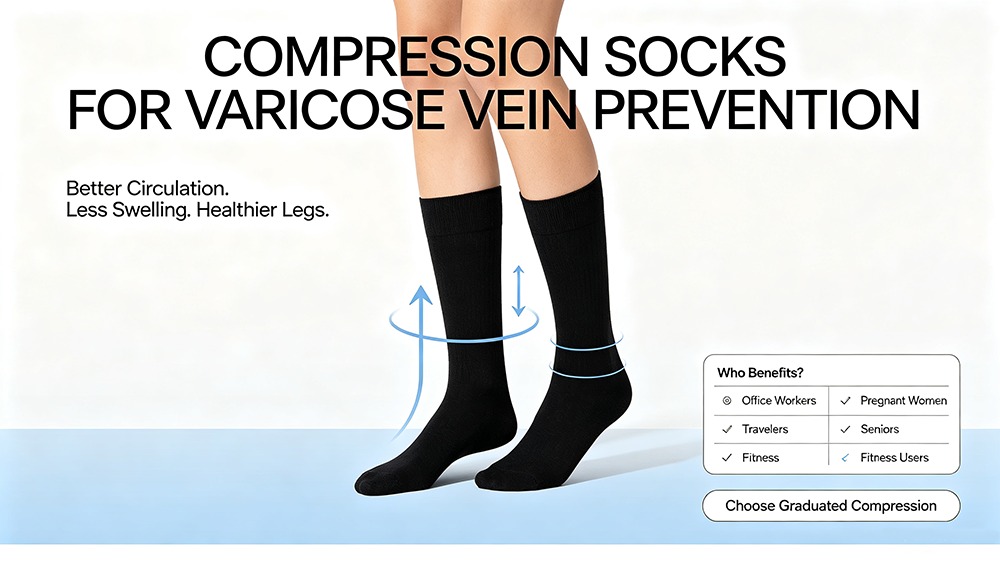 Can Compression Socks Prevent Varicose Veins? The Truth & Proven Benefits
  When is the best time of day to wear compression socks?
 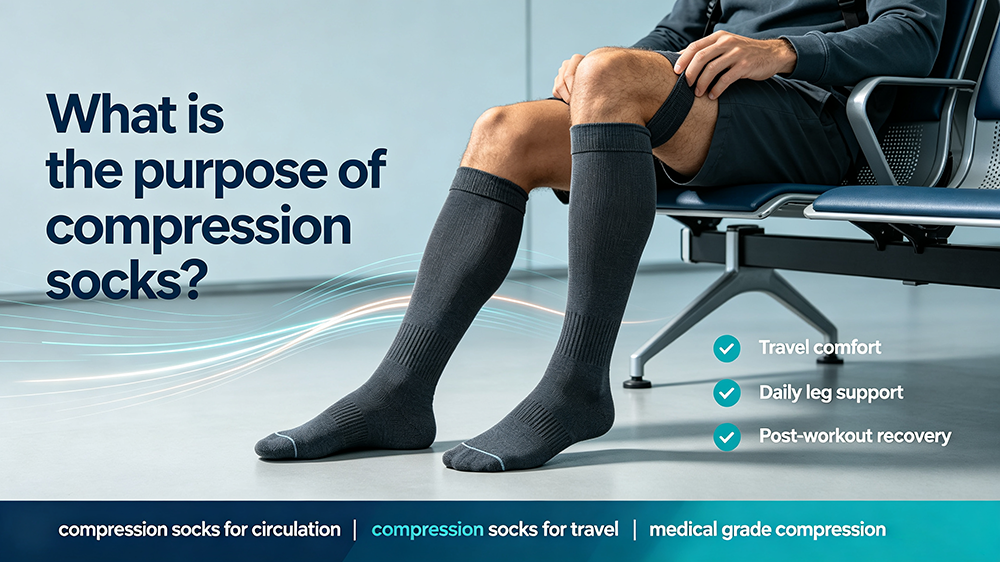 What is the purpose of the compression socks?
  When Should You Not Wear Compression Socks?
 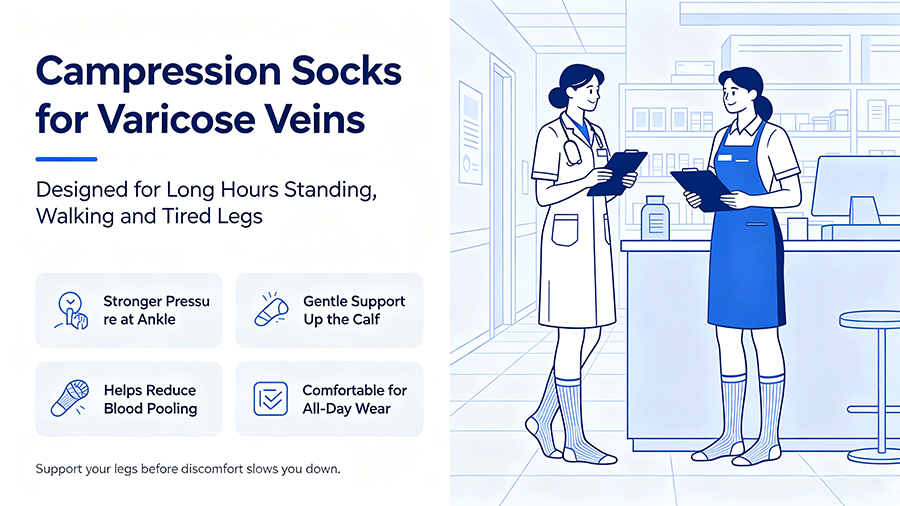 Will Compression Socks Help Varicose Veins?
  Medical Compression Socks Manufacturer & OEM Partner
  Why Nurses Wear Compression Socks: Benefits for Long Hours Standing?
  Medical Compression Socks Manufacturer with 30 Years of Manufacturing Experience
  Compression Socks for Athletes: Recovery Benefits After Training
  Best Compression Socks for Running: Do They Really Improve Performance?
  Best Compression Socks for Long Flights and Travel