
Are Compression Socks Good for Running and Exercise?
author: Jerry Guo
2026-10-27

If you've ever scrolled past compression gear in a running store and wondered whether it's worth the money, you're not alone. Runners, gym-goers, and athletes at every level keep asking the same question: do compression socks help with running? The short answer is yes — when you choose the right pair, pick the correct pressure level, and wear them consistently.
In this guide, we break down how compression socks and compression calf sleeves work, what benefits they deliver during and after exercise, and exactly what to look for when shopping for running compression socks for sports.
1. What Are Compression Socks?
Compression socks are snug-fitting knit garments designed to apply graduated pressure to your lower legs — tightest at the ankle and gradually loosening as they move up toward the calf. This pressure pattern encourages venous blood to flow back toward the heart more efficiently instead of pooling in the feet and lower legs.
-
Improved circulation — graduated compression helps push oxygen-rich blood toward working muscles
-
Reduced muscle oscillation — the snug fit dampens calf vibration with every stride
-
Vein support — keeps blood vessels in a more open, efficient position
Compression calf sleeves are a popular variation. They cover only the calf and leave the foot free, so you can pair them with your own running shoes, custom orthotics, or favorite thin athletic socks. Many runners prefer sleeves because they're easier to slip on, more breathable, and less likely to cause foot blisters during long runs.
2. Do Compression Socks Help With Running?
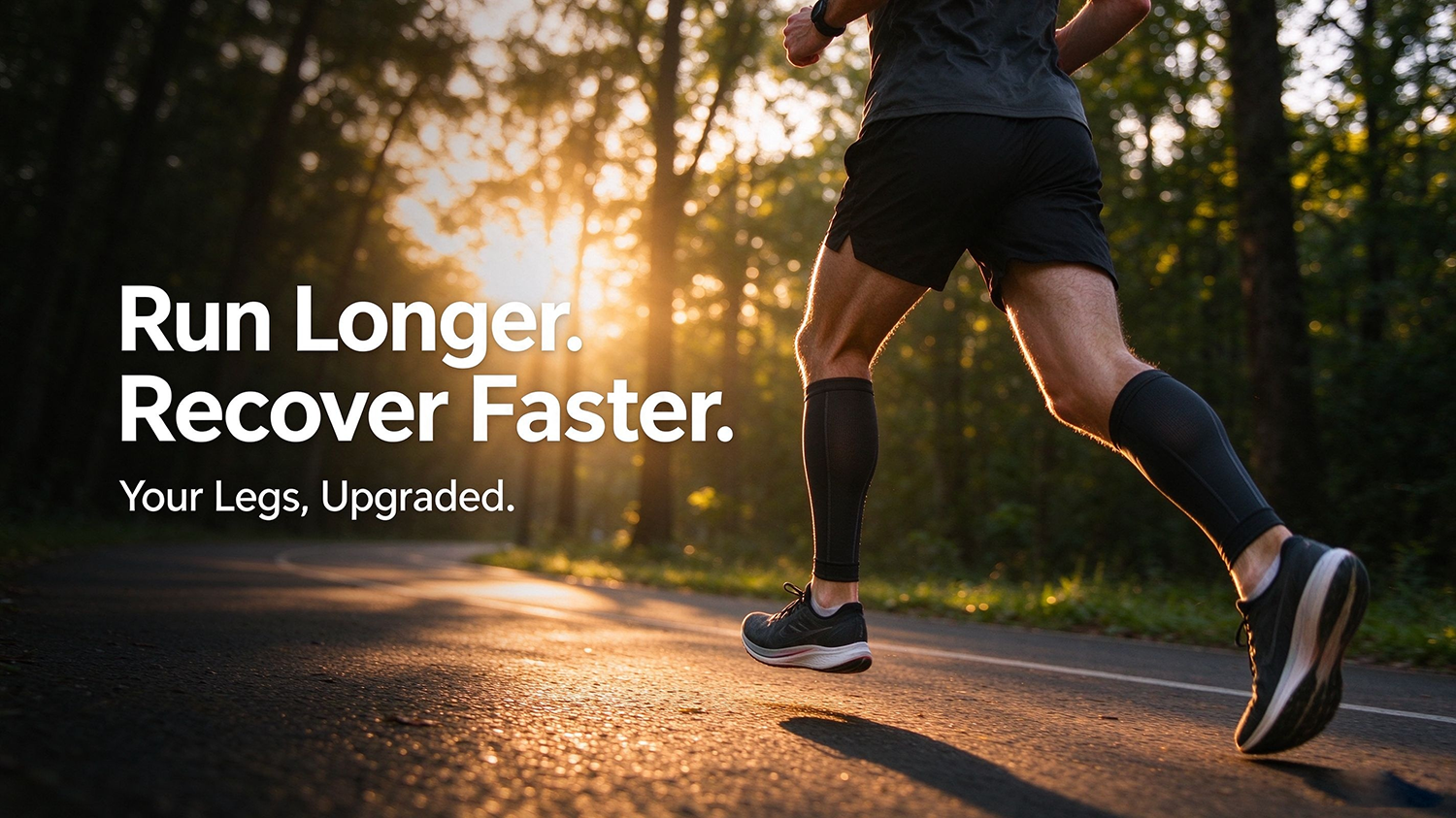
This is the question every runner asks before buying. Here's what most athletes experience when they add compression wear to their training routine:
During your run or workout
-
Reduced muscle fatigue — the supportive fit cuts down calf and shin vibration under impact
-
Better oxygen delivery — improved blood flow helps working muscles perform longer
-
Lower perceived exertion — many runners report feeling lighter and more comfortable mid-training
-
Improved proprioception — the close fit gives you a better feel for the ground underfoot
-
Less blood pooling — your feet and calves feel less heavy as miles add up
During recovery
-
Reduced post-run swelling — compression helps prevent fluid buildup in the calves and ankles
-
Faster muscle recovery — many athletes wear compression socks post-workout, during rest days, or on long flights
-
Eased next-day stiffness — support and pressure can help reduce delayed onset muscle soreness (DOMS)
Important note: Results vary by individual, compression level, and activity type. Compression socks are an athletic support product designed to enhance comfort and performance — they are not a medical treatment or cure for any condition. If you have a circulatory condition, consult your doctor before use.
3. Compression Socks vs. Compression Calf Sleeves
Both options deliver the same graduated compression benefit, but they fit different preferences and scenarios:
|
Feature
|
Compression Socks
|
Compression Calf Sleeves
|
|---|---|---|
|
Coverage
|
Full foot + calf
|
Calf only, foot left free
|
|
Best for
|
Full-leg support, long-distance running, recovery
|
Runners who prefer their own socks or orthotics
|
|
Foot comfort
|
Integrated foot pocket, seamless toe
|
Wear over your favorite thin running socks
|
|
Ease of use
|
Requires more effort to pull on
|
Very easy — slide up from below the knee
|
|
Breathability
|
Full coverage, slightly warmer
|
More airflow, great for hot weather
|
Most runners start with running compression socks for sports in the 15–20 mmHg range for daily training, then move up to 20–30 mmHg for marathon training, high-mileage weeks, or post-exercise recovery.
4 .How to Choose the Right Pair
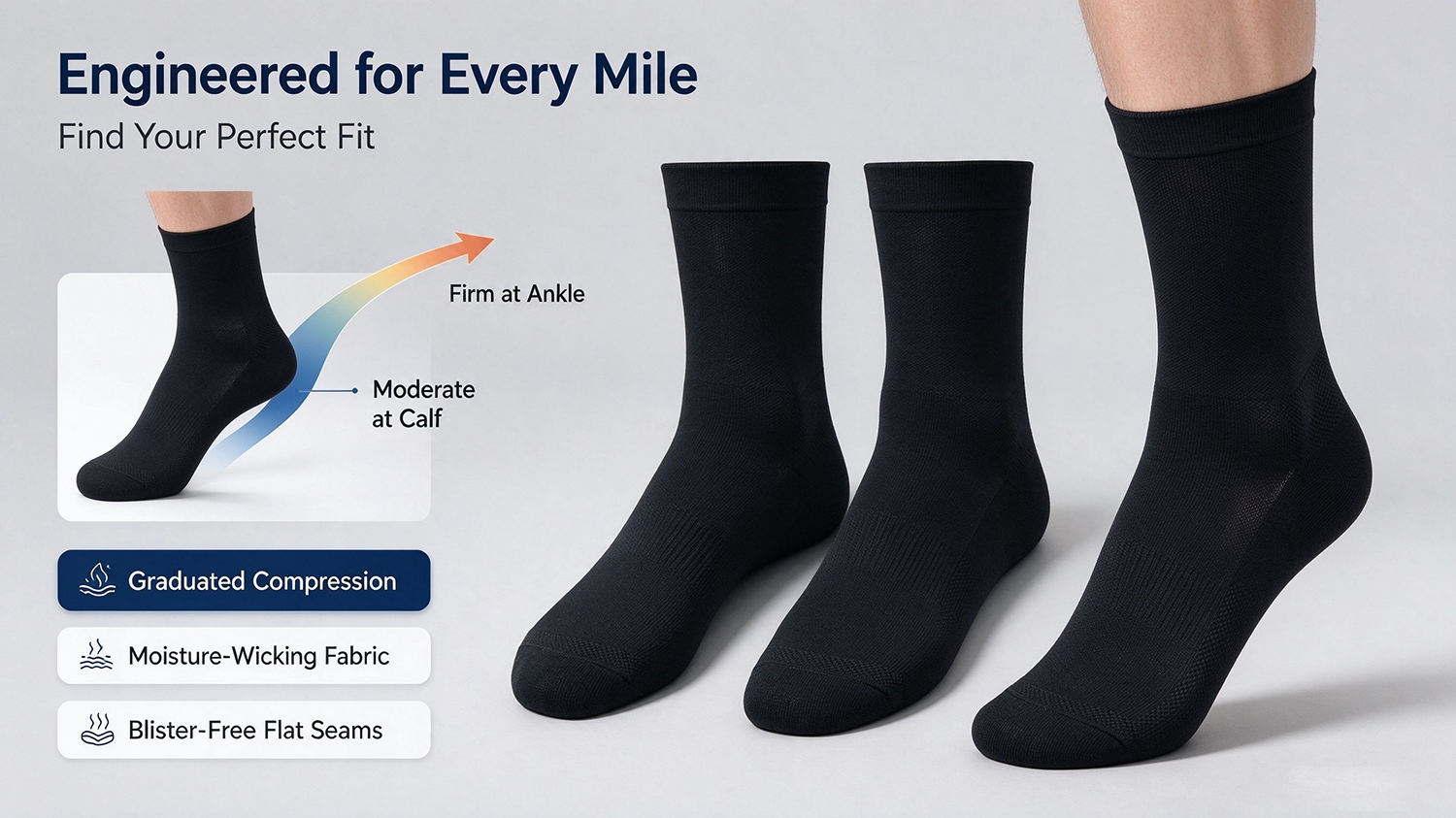
Not all compression wear is created equal. When shopping for running compression socks for sports, check for these non-negotiable features:
-
True graduated compression — tightest at the ankle (20–30 mmHg range), gradually loosening up the calf. Avoid uniform tightness, which does the opposite of what you want.
-
Moisture-wicking fabric — high-quality nylon/spandex blends pull sweat away from skin and dry quickly, keeping feet and calves dry during long runs.
-
Flatlock seams — prevents blisters, chafing, and skin irritation, especially around the ankle and calf edges.
-
Reinforced heel and toe — extends the lifespan through hundreds of training miles and frequent washes.
-
Non-slip top band — a silicone or elastic grip at the top keeps the sleeve or sock from sliding down mid-run.
-
True-to-size sizing — always measure your calf circumference and ankle circumference. Don't just guess by your shoe size; compression fit is about leg dimensions, not foot length.
5. Who Should Wear Compression Socks?
Compression wear isn't reserved for elite marathoners. It can support a wide range of active and everyday users:
-
Long-distance runners and marathoners — reduce fatigue over 10K, half-marathon, and full-marathon distances
-
Gym and HIIT enthusiasts — support calf muscles during jump-heavy workouts and post-session recovery
-
Cyclists and triathletes — maintain circulation during long rides and brick workouts
-
Standing professionals — nurses, chefs, retail workers, and teachers who spend 8+ hours on their feet
-
Travelers — reduce leg swelling during long flights or road trips
-
Beginners getting back into running — extra support helps ease the transition and reduce beginner soreness
Final Verdict
So, are compression socks good for running and exercise? Absolutely — as long as you pick the right pressure level, size correctly by measuring your calves and ankles, and pair them with consistent training. Whether you go for full compression socks or lightweight compression calf sleeves, the goal is the same: support your legs, stay comfortable mile after mile, and recover faster between workouts.
 What Compression Socks Should I Wear After Surgery?
 Are Compression Socks Good for Older Adults?
 What Are the Best Compression Socks for Nurses?
 Are Compression Socks Safe to Wear During Pregnancy?
 What Are the Best Compression Socks for Long Flights? | Rongrong Hosiery
 What Are the Best Compression Socks for Standing All Day?
 What Compression Level Do I Need for Varicose Veins? | Rongrong Hosiery
 Should I Choose Knee-High or Thigh-High Compression Socks? | Rongrong Hosiery
 What Size Compression Socks Do I Need?
 How Should Compression Socks Fit? A Guide to Finding the Perfect Fit
 How Do I Measure for Compression Socks? A Complete Sizing Guide
 How Do I Choose the Right Compression Socks? A Complete Guide
 What Are the Best Compression Socks for Varicose Veins?
 How Tight Should Compression Socks Be?
 Can You Wear Compression Socks Every Day?
 Can You Wear Compression Socks on a Plane?
 How Often Should You Replace Compression Socks?
 How Do You Put On Compression Stockings?
 When Should You Put On Compression Socks?
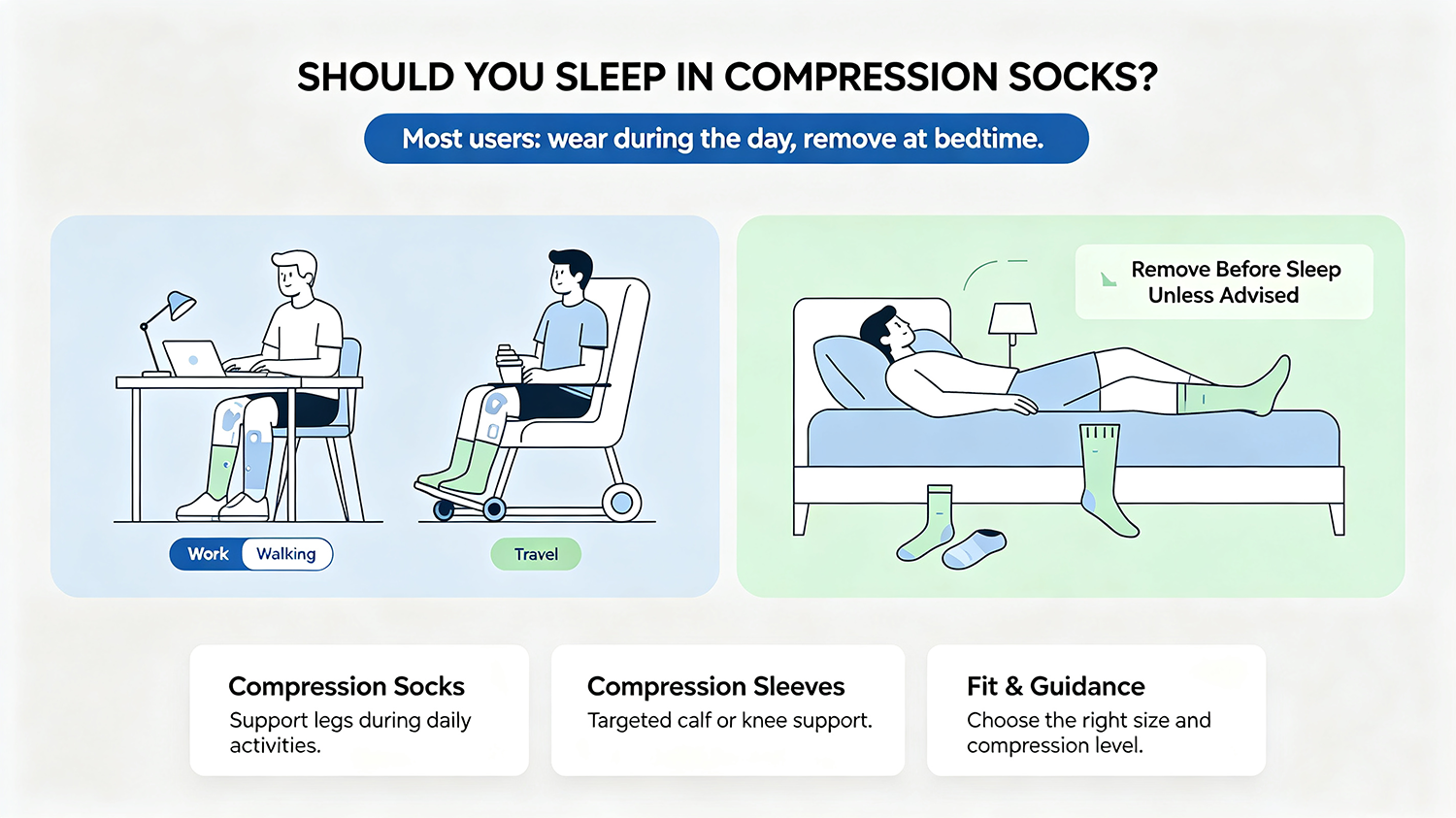 Can You Sleep in Compression Socks?