
How Often Should You Replace Compression Socks?

Compression socks are designed to provide consistent, graduated pressure to support circulation, reduce swelling, and improve comfort during long periods of standing, sitting, traveling, or exercise. But even high-quality compression socks do not last forever. Over time, repeated stretching, washing, and daily wear can reduce the elasticity that creates compression.
So, how often should you replace compression socks? For many regularly used pairs, a practical replacement range is about every 3–6 months, although the exact lifespan depends on how frequently you wear them, how you wash them, the compression level, and the manufacturer's instructions. Some products can last longer with rotation and careful maintenance.
1. How Often Should You Replace Compression Socks?
A good rule of thumb is:
- Daily wear: Consider replacing them approximately every 3–6 months.
- Occasional wear: A pair may last longer, depending on condition.
- Heavy exercise or frequent use: More frequent replacement may be necessary.
- Medical-grade compression garments: Follow the replacement schedule provided by your healthcare professional or manufacturer.
For example, Mayo Clinic notes that compression garments typically last around 3–6 months, while Guy's and St Thomas' NHS Foundation Trust states that some commonly used compression stocking brands generally need replacement after 4–6 months.
However, the condition of the socks matters more than the calendar. If your compression socks are becoming loose, slipping down, or visibly worn, they may need to be replaced earlier.
Signs It's Time for a New Pair
Look for these signs:
- The socks feel noticeably looser than when they were new.
- They slide down during the day.
- The top band no longer stays securely in place.
- The heel or toe area becomes thin or stretched.
- You notice holes, runs, or damaged fibers.
- Putting them on suddenly feels much easier than before.
- The socks no longer provide the same supportive feeling.
Loss of elasticity can mean that the garment is no longer providing the intended compression.
Promotional tip: If you rely on compression socks every day, purchasing 2–3 pairs makes it easier to rotate them while another pair is being washed and dried.
2. How Often to Wash Compression Socks?
One of the most common questions is how often to wash compression socks.
The short answer: After every wear.
Compression socks sit directly against your skin for hours, collecting:
- Sweat
- Body oils
- Dead skin
- Lotion and skincare products
- Dirt and other residue
Regular washing helps keep the fabric clean and can help preserve the compression profile. Several medical and manufacturer care guides recommend washing compression garments after each use or daily.
Why washing every day can actually help
It may seem logical that fewer washes would make compression socks last longer. In practice, leaving sweat, oils, and lotions in the fibers is not ideal.
A simple routine is:
- Wear your compression socks during the day.
- Remove them at the end of the day.
- Wash them gently.
- Allow them to dry completely.
- Wear a clean pair the following day.
If you own two or three pairs, you can easily create a rotation without needing to wear damp socks.
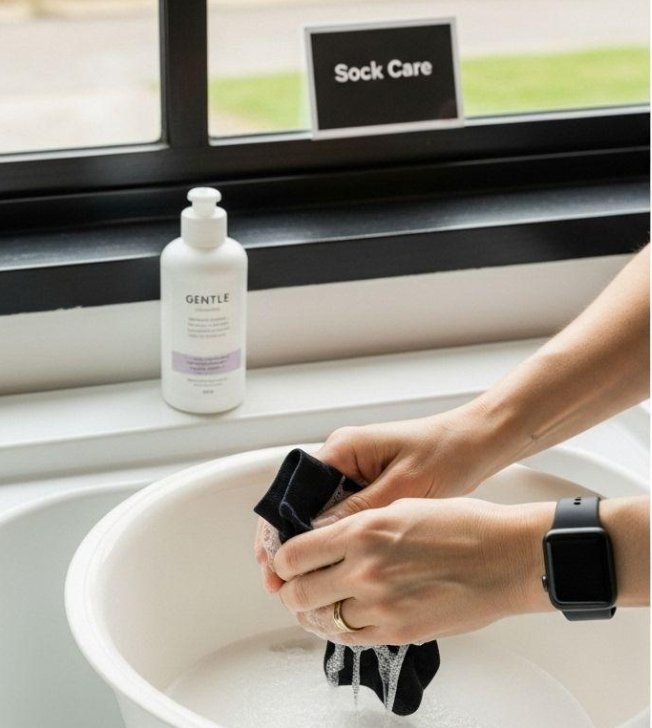
3. Washing Compression Socks: The Right Way
Proper washing compression socks is one of the easiest ways to extend their useful life.
Recommended washing routine
Step 1: Check the care label
Different compression socks use different fiber blends and constructions. Always prioritize the washing instructions supplied with your specific product.
Step 2: Use cool or lukewarm water
Avoid unnecessarily hot water. Excessive heat can damage elastic fibers over time. Mayo Clinic recommends machine washing compression garments on a delicate cycle at 40°C/104°F or below.
Step 3: Choose a mild detergent
Use a gentle detergent and avoid:
- Bleach
- Fabric softener
- Harsh stain removers
- Dryer sheets
Fabric softeners and bleach can damage or interfere with the fibers responsible for elasticity.
Step 4: Use a delicate cycle if machine washing
If your product permits machine washing:
- Use a delicate cycle.
- Put the socks inside a mesh or lingerie bag.
- Avoid washing them with rough items such as towels or garments with zippers.
Step 5: Don't wring them
After washing, gently press out excess water or roll them in a towel. Avoid twisting or wringing, which can unnecessarily stretch the knitted structure.
4. Can Compression Socks Go in the Dryer?
The answer is: it depends on the product.
If you're wondering can compression socks go in the dryer, the safest general approach is to air dry them.
High heat can damage elastic fibers, so many manufacturers and healthcare organizations recommend air drying.
However, there is an important exception: some compression sock manufacturers specifically allow low-temperature tumble drying. For example, CEP says its compression socks can be tumble dried on low heat, while JOBST lists certain products that can also be tumble dried at low temperature.
If your care label allows a dryer:
- Select low heat.
- Use a delicate drying cycle if available.
- Avoid high heat.
- Never use dryer sheets unless the manufacturer specifically permits them.
If you're unsure:
Air drying is the safer choice.
Lay the socks flat or hang them somewhere away from direct sunlight, radiators, and other intense heat sources.
5. 7 Common Mistakes That Shorten Compression Sock Life
Want your compression socks to last longer? Avoid these common mistakes:
① Washing in very hot water
High temperatures can accelerate wear of elastic fibers.
② Using fabric softener
Fabric softener is generally not recommended for compression garments because it can affect the fibers.
③ Using bleach
Bleach can damage synthetic and elastic fibers.
④ Using high-heat drying
A hot dryer can be particularly hard on elastic materials.
⑤ Wringing the socks
Twisting wet compression socks can place unnecessary stress on the knit.
⑥ Pulling aggressively on the top band
Use proper techniques to put compression socks on instead of repeatedly overstretching the cuff.
⑦ Wearing the same pair every day without rotation
Having multiple pairs allows you to wash and dry each pair properly between uses.
6. How to Make Compression Socks Last Longer
A simple care routine can help you get more value from every pair.
✔ Build a 2–3 pair rotation
Instead of relying on one pair every day, rotate several pairs.
✔ Wash after every use
This helps remove sweat, oils, and residue.
✔ Follow the care label
Compression products differ. The manufacturer's instructions should take priority.
✔ Choose gentle washing
Cold or lukewarm water, mild detergent, and a delicate cycle are commonly recommended.
✔ Prefer air drying
Unless the manufacturer specifically permits low-temperature tumble drying, air drying is the safer option.
✔ Store them carefully
Keep compression socks somewhere cool and dry, away from direct sunlight and sharp objects.
7. A Simple Compression Sock Replacement Checklist
Use this quick checklist every few weeks:
| What to check | What it means |
|---|---|
| Still feels snug around the ankle | Usually good |
| Slides down during wear | Check fit and consider replacement |
| Cuff has lost elasticity | Replacement may be needed |
| Fabric is thinning | Consider replacement |
| Holes or runs | Replace |
| Feels significantly looser | Compression may have decreased |
| No noticeable change after months of use | Continue following the manufacturer's recommended lifespan |
Remember that fit and compression performance are more important than simply counting months.
8. How to Choose Your Next Pair
When it is time to replace your compression socks, consider more than just appearance.
Look for:
- Appropriate compression level
- Accurate sizing
- Comfortable fabric
- Breathability
- Moisture management
- Durable construction
- Clear washing instructions
- A design suited to your daily activity
If you wear compression socks for a specific medical condition, ask your healthcare professional which compression level and style are appropriate for you.
9. FAQ: Compression Sock Care
How often should compression socks be replaced?
Many frequently worn compression garments need replacement after roughly 3–6 months, but actual lifespan varies by product and usage. Replace them sooner if they become loose, damaged, or noticeably less supportive.
How often to wash compression socks?
For most regularly used compression socks, wash them after every wear. This removes sweat, oils, and residue and helps maintain cleanliness and fabric performance.
Can compression socks go in the dryer?
Sometimes. Some products permit low-temperature tumble drying, while others specifically recommend air drying. Always check the care label. Avoid high heat.
Can I wash compression socks in a washing machine?
Many can be machine washed on a gentle/delicate cycle, generally with cool or lukewarm water. A mesh laundry bag can provide additional protection.
Can I use fabric softener on compression socks?
It is generally recommended to avoid fabric softener, as well as bleach and dryer sheets, unless the specific manufacturer says otherwise.
Should compression socks be replaced when they become easier to put on?
They should be inspected. If they have become significantly easier to put on and feel looser or slide down more easily, this can indicate loss of elasticity and may mean it's time for a replacement.
Final Takeaway
Taking care of compression socks is simple: wash them after each wear, use gentle detergent, avoid bleach and fabric softener, minimize heat, and replace them when the compression or elasticity noticeably declines.
For many people who wear compression socks regularly, planning for a replacement approximately every 3–6 months is a useful starting point—but always follow the specific product's care instructions.
Ready for your next pair? Choose compression socks made with durable, comfortable materials and clear care instructions, then keep 2–3 pairs in rotation. Proper washing and drying can help you maintain comfort and get the most from every pair.
 Are Compression Socks Good for Running and Exercise?
 What Compression Socks Should I Wear After Surgery?
 Are Compression Socks Good for Older Adults?
 What Are the Best Compression Socks for Nurses?
 Are Compression Socks Safe to Wear During Pregnancy?
 What Are the Best Compression Socks for Long Flights? | Rongrong Hosiery
 What Are the Best Compression Socks for Standing All Day?
 What Compression Level Do I Need for Varicose Veins? | Rongrong Hosiery
 Should I Choose Knee-High or Thigh-High Compression Socks? | Rongrong Hosiery
 What Size Compression Socks Do I Need?
 How Should Compression Socks Fit? A Guide to Finding the Perfect Fit
 How Do I Measure for Compression Socks? A Complete Sizing Guide
 How Do I Choose the Right Compression Socks? A Complete Guide
 What Are the Best Compression Socks for Varicose Veins?
 How Tight Should Compression Socks Be?
 Can You Wear Compression Socks Every Day?
 Can You Wear Compression Socks on a Plane?
 How Do You Put On Compression Stockings?
 When Should You Put On Compression Socks?
 Can You Sleep in Compression Socks?