
Anti Embolism Stockings vs Compression Socks: Which One Do You Need?
author: Jerry Guo
2026-08-08

When shopping for leg compression wear, most people easily mix up anti embolism stockings (also known as anti thrombosis stockings) and regular compression socks. Though both boost blood circulation and protect leg vascular health, they are engineered for entirely different scenarios, user groups and functional purposes. Choosing the right pair is critical to enjoying safe, effective compression support and avoiding ineffective wear or unnecessary discomfort.
What Are Anti Embolism / Anti Thrombosis Stockings?
Anti embolism stockings, widely called anti thrombosis stockings in medical settings, are professional medical-grade compression garments designed exclusively forhospital and clinical use. They are specialized medical equipment focused on one core goal: preventing venous thromboembolism (VTE) and deep vein thrombosis (DVT), a common high-risk complication for immobile patients.
These stockings are tailored for post-surgery recovery and bedridden patients. After surgical procedures, prolonged bed rest limits leg movement, slows down venous blood flow, and greatly increases the risk of blood clot formation. Featuring standardized graduated compression that conforms to strict medical specifications, they deliver stable, targeted pressure on the legs to push stagnant blood back to the heart, effectively eliminating clot risks for immobile hospital patients. They are only recommended for stationary users under medical guidance, and are not suitable for daily active wear.
What Are Compression Socks?
Compression socks are versatile, lifestyle-friendly compression wear built for daily active scenarios. Unlike medical-focused anti thrombosis stockings, they prioritize comfort, flexibility and long-wear adaptability, perfectly matching the needs of modern busy lifestyles.
They are ideal for daily wear for people who stand or sit for long hours, such as office workers, teachers and retail staff. The gentle graduated compression relieves leg fatigue, reduces swelling, and prevents varicose veins caused by long-term static posture. For sports enthusiasts, these socks accelerate blood circulation during and after workouts, relieve muscle soreness, reduce lactic acid buildup, and speed up post-exercise recovery while preventing sports-related leg strain and edema.
Besides daily and sports use, compression socks are a must-have for travel. Long-haul flights, high-speed train rides and road trips mean hours of sitting still, which slows leg blood flow. Wearing compression socks during travel effectively avoids travel leg swelling, stiffness and low-level clot risks, keeping legs fresh throughout long journeys.
Core Differences at a Glance
Anti Embolism / Anti Thrombosis Stockings
-
Core positioning: Professional medical-grade anti-clot compression garments
-
Applicable scenarios: Hospital inpatient care, post-surgery recovery, long-term bed rest
-
Target users: Immobile or semi-immobile patients with thrombosis risk
-
Key function: Medical prevention of deep vein thrombosis for inactive patients
Compression Socks
-
Core positioning: Daily functional compression wear for lifestyle protection
-
Applicable scenarios: Daily work, various sports activities, long-distance travel
-
Target users: Healthy active people with leg fatigue and circulation maintenance needs
-
Key function: Relieve leg fatigue, reduce swelling, maintain vascular health
Final Verdict: Pick the Right Pair for Your Needs
If you are a patient recovering from surgery, or need bedridden care in a hospital,anti embolism stockings / anti thrombosis stockings are your safest and most effective choice for medical anti-clot protection. If you just need to relieve daily leg tiredness, support sports recovery, or protect your legs during long travels, flexible and comfortable compression socks are the perfect daily companion.
Never mix medical compression wear with lifestyle compression wear. Matching the right product to your scenario ensures you get maximum protection and comfort every single day!
 Are Compression Socks Good for Running and Exercise?
 What Compression Socks Should I Wear After Surgery?
 Are Compression Socks Good for Older Adults?
 What Are the Best Compression Socks for Nurses?
 Are Compression Socks Safe to Wear During Pregnancy?
 What Are the Best Compression Socks for Long Flights? | Rongrong Hosiery
 What Are the Best Compression Socks for Standing All Day?
 What Compression Level Do I Need for Varicose Veins? | Rongrong Hosiery
 Should I Choose Knee-High or Thigh-High Compression Socks? | Rongrong Hosiery
 What Size Compression Socks Do I Need?
 How Should Compression Socks Fit? A Guide to Finding the Perfect Fit
 How Do I Measure for Compression Socks? A Complete Sizing Guide
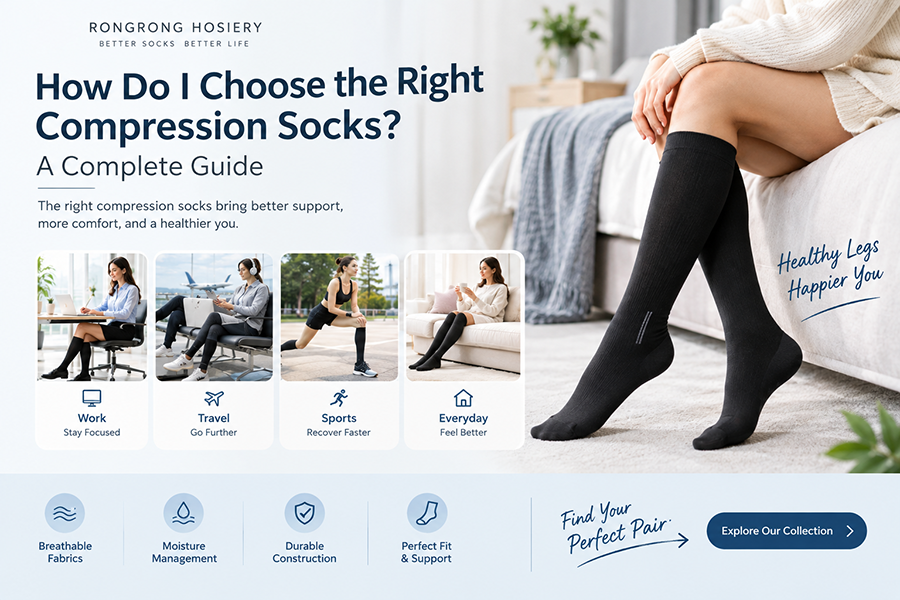 How Do I Choose the Right Compression Socks? A Complete Guide
 What Are the Best Compression Socks for Varicose Veins?
 How Tight Should Compression Socks Be?
 Can You Wear Compression Socks Every Day?
 Can You Wear Compression Socks on a Plane?
 How Often Should You Replace Compression Socks?
 How Do You Put On Compression Stockings?
 When Should You Put On Compression Socks?