
Size Up or Size Down for Compression Socks? Ultimate Fitting Guide for Perfect Support & Comfort
author: Jerry Guo
2026-08-10

Many people struggle with a common question when buying compression socks: should I size up or size down? Unlike ordinary casual socks, compression socks rely on precise graduated pressure to deliver health and athletic benefits. Wrong sizing will completely ruin their effectiveness, cause discomfort, or even bring health risks. Below is a clear, scenario-based sizing guide to help you pick the perfect fit every time.
1. Core Rule: Never Blindly Size Down
A lot of users mistakenly believe that tighter compression socks work better. This is the biggest misunderstanding of compression wear.
-
Dangers of sizing down: Oversmall compression socks cause excessive tightness, restrict normal blood circulation, lead to numbness, tingling, leg discoloration, and muscle soreness. Instead of relieving fatigue and swelling, they will aggravate leg pressure and defeat the original purpose of compression therapy.
-
Functional failure: Too-tight socks squeeze the legs unevenly, destroy the professional graduated compression design, and cannot form stable pressure from the ankle to the calf.
Conclusion: Sizing down is not recommended in any daily, sports or medical scenario.
2. When to Size Up: Best for Daily Wear & Recovery
Sizing up is the safest and most comfortable choice for most ordinary users. A slightly looser fit retains standard compression effects while ensuring all-day wearability.
-
All-day long-time wear: For office workers, teachers, and staff who stand or sit for 8+ hours a day, sized-up compression socks avoid leg binding, let you stay comfortable from morning to night, and effectively relieve heavy legs and fatigue.
-
Post-workout & daily recovery: Fitness enthusiasts, runners and athletes can choose one size up for post-training recovery. It accelerates blood circulation, relieves muscle soreness and calf swelling without restraining muscle relaxation.
-
Travel & swelling prevention: Long flights and drives easily cause leg edema. Sized-up compression socks provide gentle and stable pressure, effectively prevent venous stasis and reduce swelling.
-
Special leg shapes: If you have wide calves, muscular legs, or are between two sizes, sizing up is the optimal choice to avoid tight squeezing and rolling cuffs.
3. When to Stick to Standard Size (Slightly Snug Fit)
Standard size is tailor-made for professional athletic scenarios, balancing compression performance and fitting stability.
-
Professional sports scenarios: For running, cycling, marathon and high-intensity sports, standard-size compression socks fit closely with legs, provide targeted arch and calf support, reduce muscle vibration, improve exercise endurance, and will not slip or shift during strenuous movement.
-
Users with standard leg shapes: If your calf and ankle circumference fully matches the size chart, the standard size delivers the most accurate 15–20 mmHg graduated compression, maximizing the product’s functional value.
4. How to Judge a Perfect Compression Sock Fit
A qualified fit is snug like a firm hug, never painful or numb:
-
Close fitting without slack or wrinkling;
-
No tight binding marks after taking off;
-
Free movement of legs and feet, no numbness or swelling during wear;
-
Stable compression, obvious relief of heavy legs and fatigue.
5. Professional Sizing Tips for Our Compression Socks
-
Measure accurately first: Measure ankle and calf circumference in the morning (legs are least swollen) and match with our exclusive size chart, do not choose by shoe size only.
-
New user suggestion: Beginners who are not used to compression wear are recommended to size up for easier adaptation.
-
Durable & stretchable fabric: Our high-elastic cotton blended fabric has moderate ductility, not easy to deform. Sized-up socks will not lose compression effect, and sized standard ensures long-term stable fitting.
Final Verdict
Size up for daily wear, recovery, travel, wide calves and new users – prioritize comfort and safety.
Stick to standard size for professional sports and standard leg shapes – prioritize precise compression and athletic performance.
Never size down – avoid discomfort and health risks.
 Are Compression Socks Good for Running and Exercise?
 What Compression Socks Should I Wear After Surgery?
 Are Compression Socks Good for Older Adults?
 What Are the Best Compression Socks for Nurses?
 Are Compression Socks Safe to Wear During Pregnancy?
 What Are the Best Compression Socks for Long Flights? | Rongrong Hosiery
 What Are the Best Compression Socks for Standing All Day?
 What Compression Level Do I Need for Varicose Veins? | Rongrong Hosiery
 Should I Choose Knee-High or Thigh-High Compression Socks? | Rongrong Hosiery
 What Size Compression Socks Do I Need?
 How Should Compression Socks Fit? A Guide to Finding the Perfect Fit
 How Do I Measure for Compression Socks? A Complete Sizing Guide
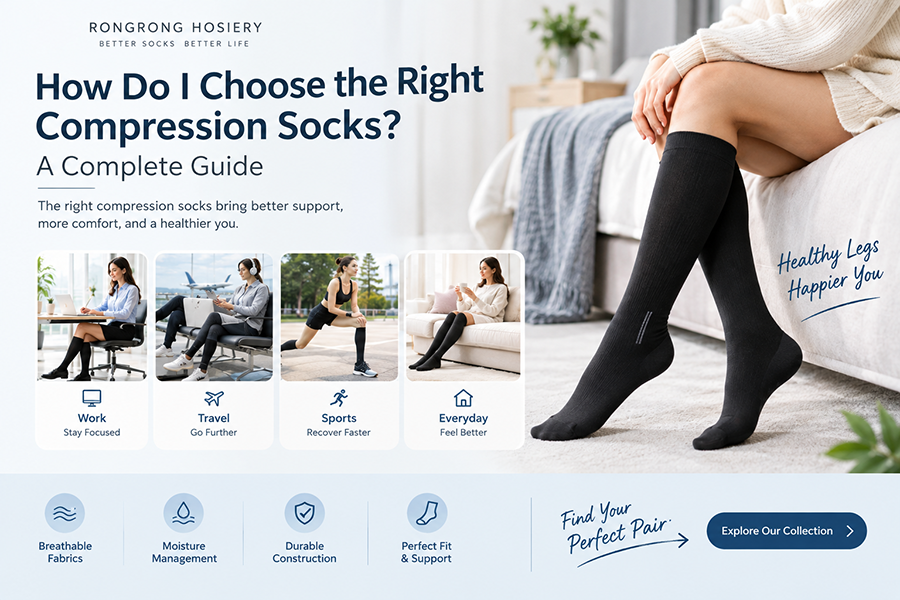 How Do I Choose the Right Compression Socks? A Complete Guide
 What Are the Best Compression Socks for Varicose Veins?
 How Tight Should Compression Socks Be?
 Can You Wear Compression Socks Every Day?
 Can You Wear Compression Socks on a Plane?
 How Often Should You Replace Compression Socks?
 How Do You Put On Compression Stockings?
 When Should You Put On Compression Socks?