
Compression classes explained: 8-15, 15-20, 20-30, 30-40 mmHg

Choosing the right compression levels depends on the level of support needed, the intended use, and whether medical advice is required. Understanding the difference between each mmHg range can help buyers choose the right compression socks or stockings for different needs.
1. What Do Compression Levels Mean?
Compression level is measured in mmHg (millimeters of mercury). It describes how much pressure the sock applies to the leg.
In general, higher mmHg means stronger compression. However, the best level depends on the user's needs, comfort, and medical condition.
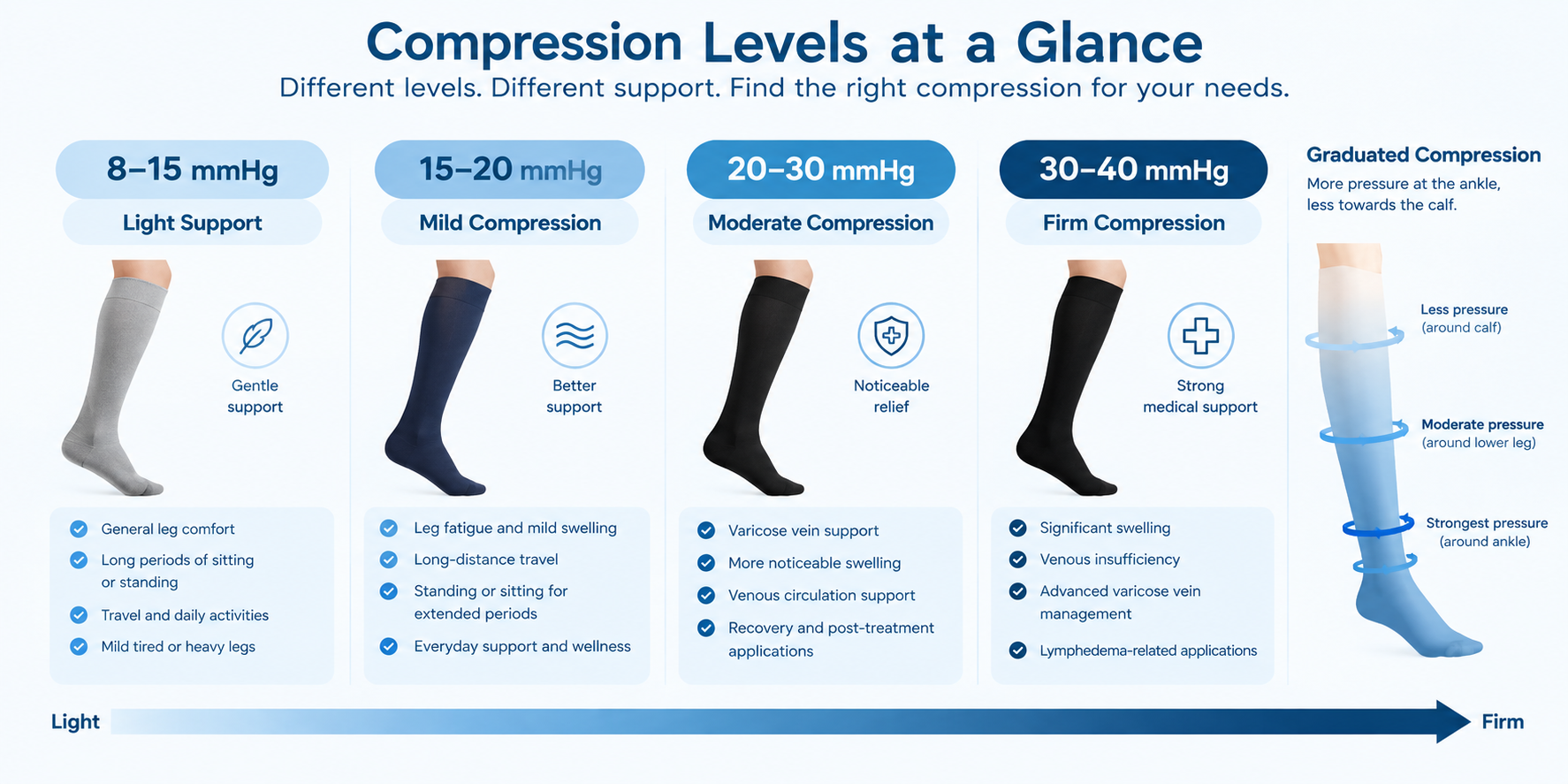
2. 8–15 mmHg: Light Support
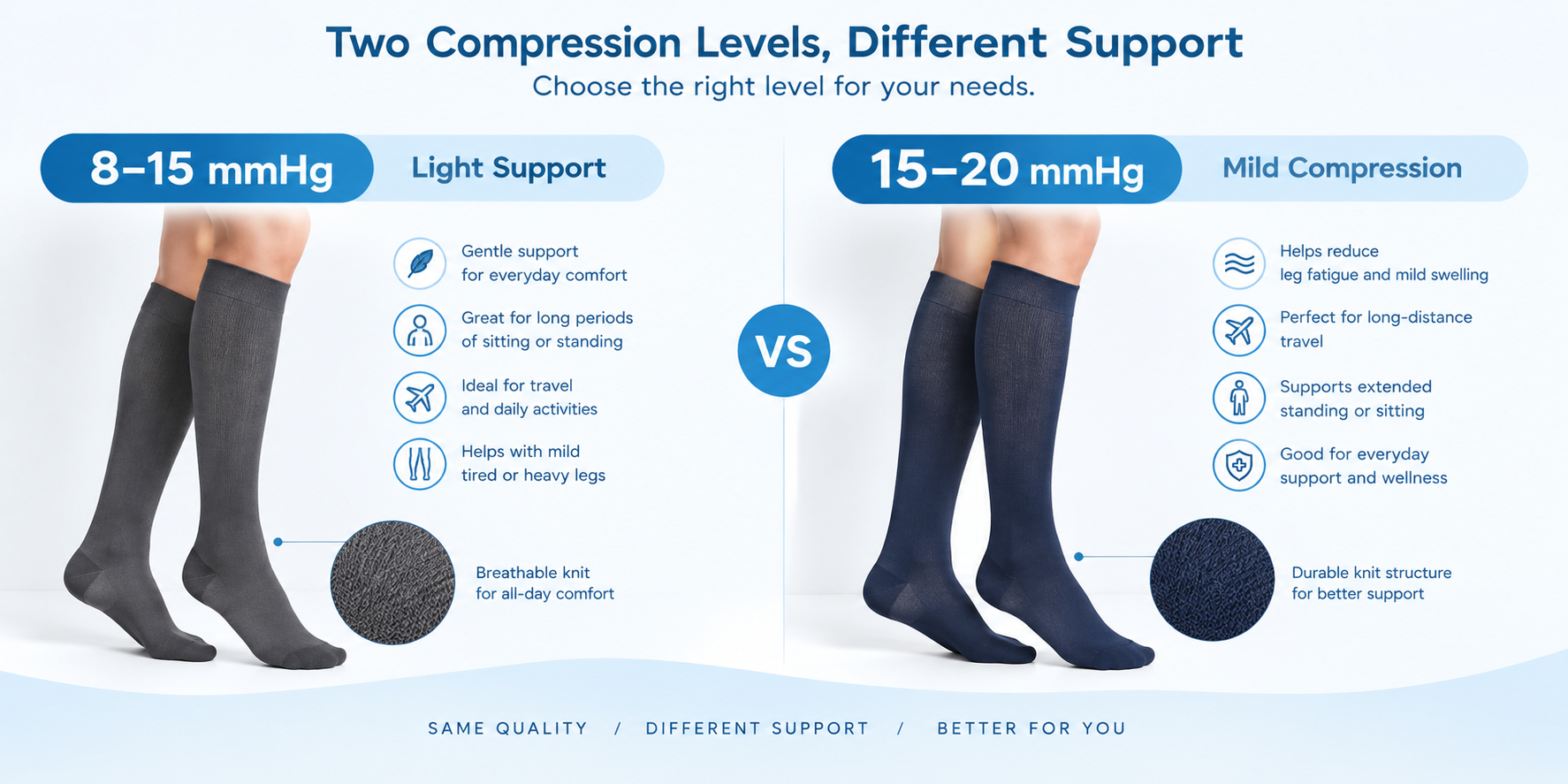
8 15 mmhg compression socks provide gentle support and are suitable for everyday wear.
They can be considered for:
- General leg comfort
- Long periods of sitting or standing
- Travel and daily activities
- Mild tired or heavy legs
This level focuses more on comfort and light support than medical compression.
3. 15–20 mmHg: Mild Compression
Compression stockings 15 20 mmhg offer stronger support than 8–15 mmHg while remaining comfortable for many everyday applications.
They are commonly used for:
- Leg fatigue and mild swelling
- Long-distance travel
- Standing or sitting for extended periods
- Everyday support and wellness
For brands and retailers, 15–20 mmHg is also a versatile option for developing sports, travel, work, and lifestyle compression products.
4. 20–30 mmHg: Moderate Compression
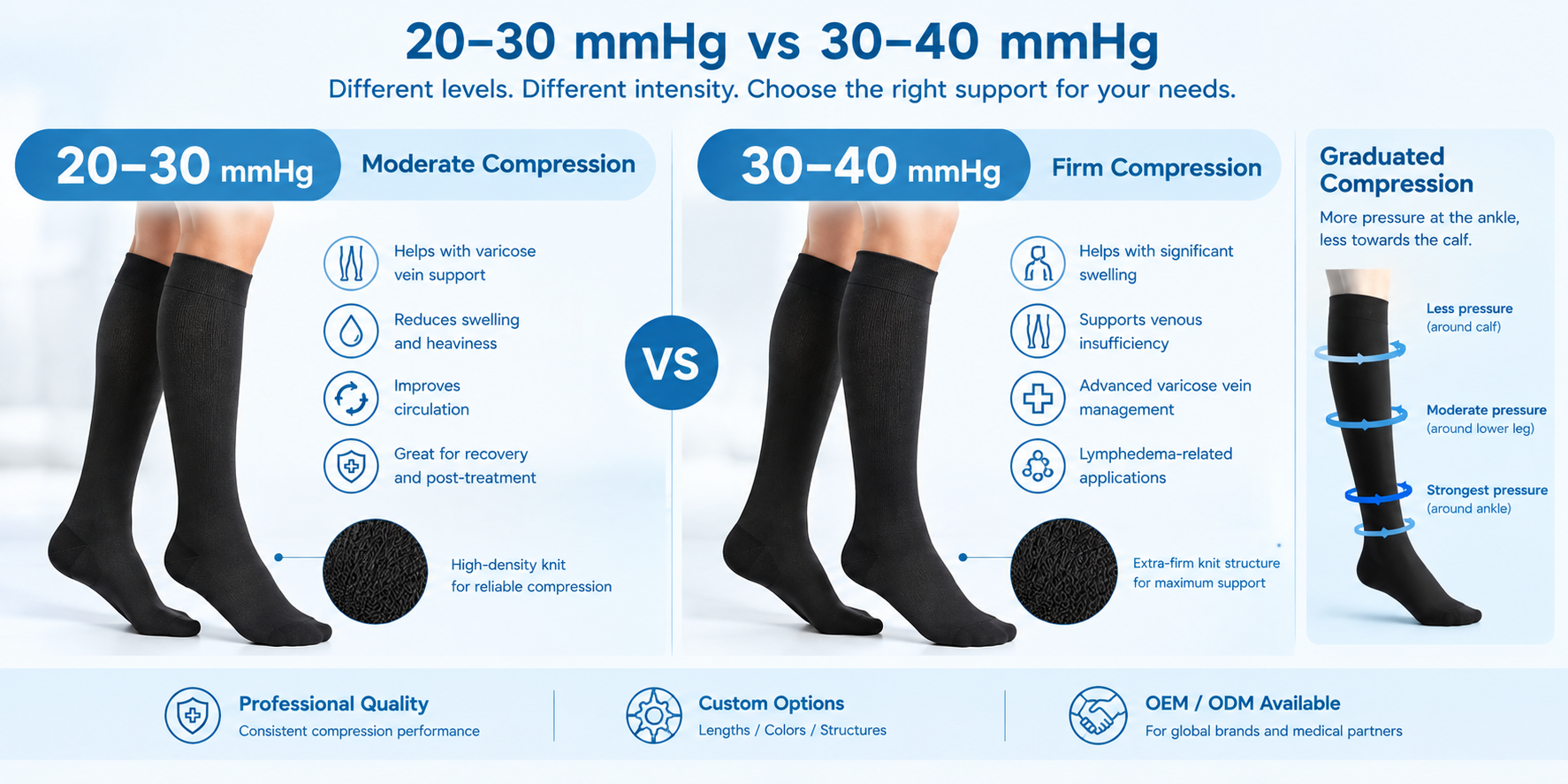
20–30 mmHg provides noticeably stronger compression and is widely used in medical and therapeutic compression products.
It may be suitable for applications such as:
- Varicose vein support
- More noticeable leg swelling
- Venous circulation support
- Recovery and post-treatment applications
For medical products, the appropriate compression level should be determined according to the intended application and professional guidance.
5. 30–40 mmHg: Firm Compression
30–40 mmHg is a firm compression level designed for more demanding medical applications.
It may be used for certain cases involving:
- Significant swelling
- Venous insufficiency
- Advanced varicose vein management
- Lymphedema-related applications
Because this is a stronger compression level, users should seek appropriate professional advice when selecting it for medical purposes.
6. How to Choose the Right Compression Level?
There is no single compression level that works for everyone.
As a simple guide:
| Compression | Typical Positioning |
|---|---|
| 8–15 mmHg | Light everyday support |
| 15–20 mmHg | Mild support & travel |
| 20–30 mmHg | Moderate / medical applications |
| 30–40 mmHg | Firm / advanced medical applications |
For B2B buyers, the right choice also depends on the target market, product positioning, customer needs, and required certifications.
7. Choose the Right Compression Partner
For brands, wholesalers, medical suppliers, and sports companies, choosing a reliable manufacturer is just as important as choosing the right compression levels.
Zhejiang Rongrong Hosiery has 30 years of sock manufacturing experience, providing OEM and ODM services for compression socks, medical compression products, sports compression socks, and private-label programs.
We support different compression levels, lengths, colors, structures, and packaging requirements to help customers develop products for different markets.
Need a custom compression sock program? Contact us for product recommendations, samples, and OEM/ODM solutions.
 What does 30-40 mmHg compression mean?
  What is the difference between 15-20 and 20-30 mmHg?
  Which Compression Class Should I Choose?
  What Compression Level Is Best for Varicose Veins?
  Best Compression Socks for Varicose Veins:20-30 mmHg Guide
  Support Socks for Varicose Veins-How Do They Help?
  Do Compression Stockings Reduce Varicose Veins?
  Do Compression Socks Help Varicose Veins?
  TED Anti-Embolic Stocking Sizing and Measurement Guide
  Can Compression Socks Prevent Varicose Veins? The Truth & Proven Benefits
  When is the best time of day to wear compression socks?
  What is the purpose of the compression socks?
  When Should You Not Wear Compression Socks?
  Will Compression Socks Help Varicose Veins?
  Medical Compression Socks Manufacturer & OEM Partner
  Why Nurses Wear Compression Socks: Benefits for Long Hours Standing?
  Medical Compression Socks Manufacturer with 30 Years of Manufacturing Experience
  Compression Socks for Athletes: Recovery Benefits After Training
  Best Compression Socks for Running: Do They Really Improve Performance?
  Best Compression Socks for Long Flights and Travel