
What kind of compression socks do doctors recommend

If you’re shopping for compression socks for swelling, tired legs, travel, work, or vein health, you may wonder this.
Which compression socks do doctors actually recommend?
Doctors and vascular specialists do not recommend “one-size-fits-all” fashion compression socks. Instead, they prescribe graduated medical-grade compression socks matched to your exact symptoms, activity level, and health condition.
This guide covers what doctors recommend. It ranks options by use case, pressure strength, and safety standards. It also answers top questions patients ask doctors every day.
1. First Rule Doctors Follow: Graduated Compression Is Non-Negotiable
The top recommendation from vascular doctors, surgeons, and nurses is always graduated compression.
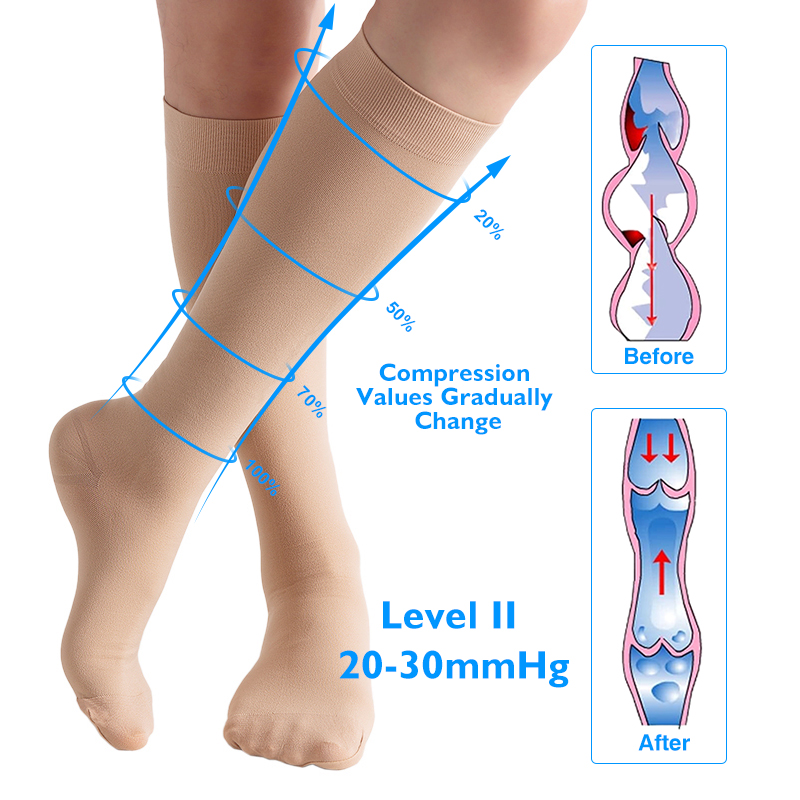
Graduated compression means the socks apply firm pressure at the ankle, gradually decreasing upward toward the calf and thigh. This mimics natural muscle pumping to push blood upward and prevent pooling in the lower legs.
What doctors avoid:
- Uniform-pressure fashion socks (equal tightness all over)
- Ultra-tight “beauty slimming socks” with no medical standard
- Cheap random compression hosiery with no labeled mmHg rating
These non-graded styles can trap blood, increase swelling, and cause discomfort or circulation problems. That is why medical providers never recommend them for therapeutic use.
2. Doctor-Recommended Compression Levels (mmHg Chart)
Doctors select compression strength based on symptoms. Below are the clinically approved pressure ranges with official medical use cases (the most searched compression guide online).
15–20 mmHg (Light Compression – #1 Daily Recommendation)
This is the safest, most widely recommended level for everyday healthy adults.
Best for:
- Sedentary office workers, teachers, retail staff (long sitting/standing)
- Travelers (long flights, road trips) to prevent travel fatigue and DVT risk
- Mild leg fatigue, minor daily swelling
- Pregnant women for mild edema prevention
Doctor verdict: Perfect for daily prevention, comfortable for all-day wear, no prescription required.
20–30 mmHg (Medium Compression – Medical Grade Most Prescribed)
This is the most popular therapeutic level recommended for early venous issues and frequent swelling.
Best for:
- Mild to moderate varicose veins
- Persistent leg swelling and post-work leg heaviness
- Post-exercise muscle recovery for runners and athletes
- Post-surgery mild circulation support
- Pregnancy-related moderate edema
Doctor verdict: The gold standard for therapeutic compression without extreme tightness.
30–40 mmHg (Firm Compression – Prescription Preferred)
Doctors reserve this stronger level for moderate to severe venous conditions.
Best for:
- Moderate to severe varicose veins
- Chronic venous insufficiency
- Post-thrombotic syndrome
- Moderate lymphedema swelling
- Post-surgical vein procedure recovery
Doctor verdict: Effective for medical conditions but too strong for casual daily wear. Many doctors recommend a prescription for proper fitting.
40+ mmHg (Heavy Compression – Doctor Prescribed Only)
Reserved exclusively for severe lymphedema, advanced venous disease, and clinical recovery. Never self-purchase without a doctor’s order.
3. Doctor-Recommended Lengths by Scenario
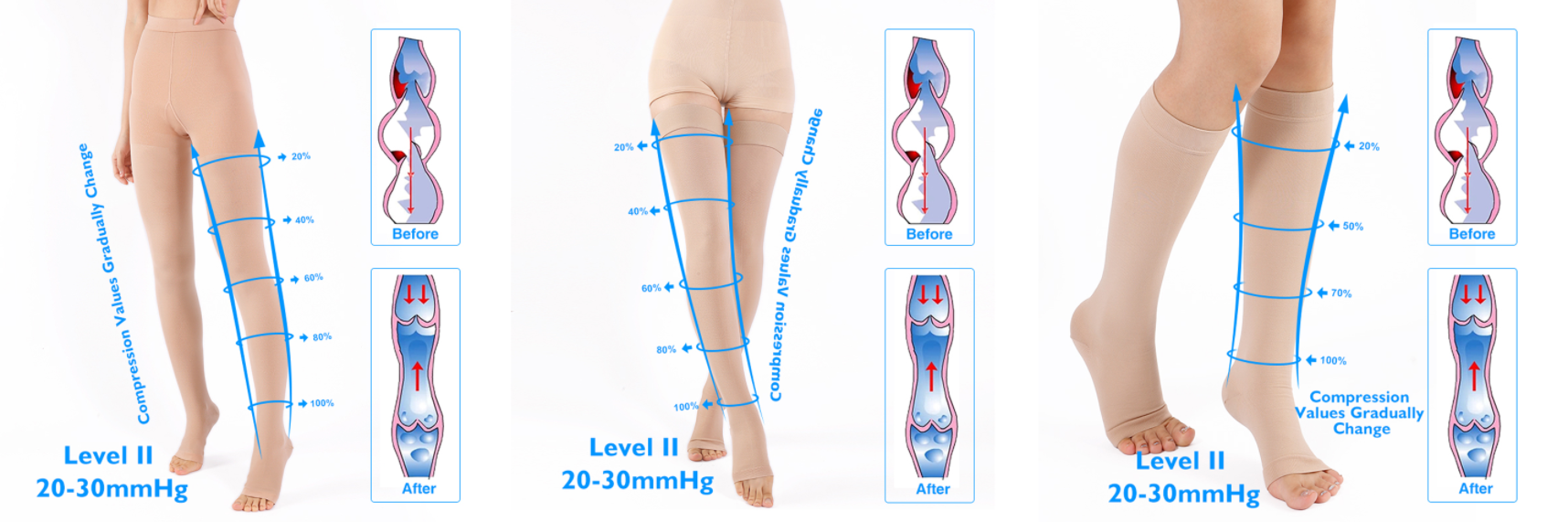
Pressure strength matters, but choosing the wrong length ruins results. Here is what clinicians advise for each situation:
Knee-High (Most Versatile & Most Recommended)
Best for 90% of users: daily work, travel, sports recovery, mild swelling, pregnancy. Doctors prefer knee-high for everyday use because it avoids waist/hip pressure and delivers targeted calf support.
Thigh-High
Recommended for: thigh swelling, upper leg varicose veins, post-surgery full-leg support, long-haul high-risk travel.
Pantyhose / Full-Leg
Recommended for: full leg lymphedema, widespread venous insufficiency, doctor-supervised long-term therapy.
4. Top Features Doctors Always Recommend
Beyond pressure and length, medical professionals prioritize these technical features for safety and effectiveness:
- Graduated pressure labeling: Clear mmHg printed on packaging (no vague “high compression” labels)
- Non-slip silicone cuff: Prevents sliding, rolling, and bunching (bunched socks cause dangerous uneven pressure)
- Breathable, moisture-wicking medical fabric: Reduces sweat, irritation, and rashes for daily wear
- Precision stitching: Consistent pressure distribution without tight bands
5. Socks Doctors DO NOT Recommend (Critical Warnings)
Doctors regularly warn patients against these common low-quality options that offer zero medical benefit:
- Fashion “compression” socks with no mmHg rating
- Uniform-tight slimming socks marketed for leg shaping
- Overly cheap, thin socks with inconsistent pressure
- Too-tight compression socks worn for long hours (can restrict circulation)
Medical compression is for circulation health, not cosmetic slimming — a key distinction all vascular doctors emphasize.
6. Quick Doctor-Recommended Selection Cheat Sheet
- Daily work, travel, mild fatigue: 15–20 mmHg Knee-High
- Varicose veins, daily swelling, athlete recovery: 20–30 mmHg Knee-High
- Moderate venous issues, post-surgery recovery: 30–40 mmHg Thigh-High (doctor consultation recommended)
- Severe swelling/lymphedema: 40+ mmHg prescription-grade compression hosiery
Final Doctor Takeaway
Doctors universally recommend labeled graduated medical-grade compression socks matched to your symptoms. For most people, 15–30 mmHg knee-high compression socks are safe and effective.
They help with prevention, daily support, and mild medical relief.
 What Are the Best Compression Socks for Travel and Walking?
  Are Compression Socks Good for Running and Exercise?
  What Compression Socks Should I Wear After Surgery?
  Are Compression Socks Good for Older Adults?
  What Are the Best Compression Socks for Nurses?
  Are Compression Socks Safe to Wear During Pregnancy?
  What Are the Best Compression Socks for Long Flights? | Rongrong Hosiery
  What Are the Best Compression Socks for Standing All Day?
  What Compression Level Do I Need for Varicose Veins? | Rongrong Hosiery
  Should I Choose Knee-High or Thigh-High Compression Socks? | Rongrong Hosiery
  What Size Compression Socks Do I Need?
  How Should Compression Socks Fit? A Guide to Finding the Perfect Fit
  How Do I Measure for Compression Socks? A Complete Sizing Guide
  How Do I Choose the Right Compression Socks? A Complete Guide
  What Are the Best Compression Socks for Varicose Veins?
  How Tight Should Compression Socks Be?
  Can You Wear Compression Socks Every Day?
  Can You Wear Compression Socks on a Plane?
  How Often Should You Replace Compression Socks?
  How Do You Put On Compression Stockings?