
Anti-Embolism Stockings vs Compression Socks: What's the Difference?
author: Jerry Guo
2026-11-10

If you have ever shopped for medical hosiery, you have probably faced the same question: what is the difference between anti-embolism stockings (TED hose) and compression socks? Although they look similar, they are designed for completely different situations, using different pressure levels and intended for different users. Picking the wrong pair can mean wasted money or, in clinical settings, inadequate protection.
This guide breaks down every key point so you can choose with confidence. Whether you are researching ted hose vs compression stockings for a loved one recovering from surgery, or comparing ted stockings vs compression stockings for your own long-shift work, the distinctions below matter.
What Are Anti-Embolism Stockings (TED Hose)?
Anti-embolism stockings, commonly called TED hose (thrombo-embolic deterrent hose), are a class of medical hosiery designed primarily for bedridden or post-surgical patients. They are not meant to be worn during normal daily walking.
-
Target user: Hospital patients, post-op recovery, people on prolonged bed rest, or anyone with limited mobility.
-
Pressure range: Typically 15–18 mmHg at the ankle — the lowest tier of medical compression.
-
How they work: Gentle gradient compression helps encourage venous blood flow back toward the heart while the wearer is largely inactive, supporting the body's own circulation when leg muscles are not moving.
-
Common design: Often open-toe so clinicians can easily check toe color, circulation, and skin condition.
-
Wear duration: Usually worn continuously (day and night) during the period of immobility, except when bathing or for skin checks.
Critical point: TED hose are intended for inactive legs. They are not designed for people who are walking, standing, or exercising for long periods. Using them for those purposes will not deliver the right level of support.
What Are Compression Socks & Compression Stockings?
Compression socks and compression stockings are built for active, mobile people. They apply graduated pressure — strongest at the ankle and gradually decreasing up the leg — to support circulation during prolonged standing, sitting, or exercise.
-
Target user: Nurses, teachers, retail workers, frequent flyers, runners, pregnant women, and anyone on their feet all day.
-
Pressure range: Widely tiered, commonly 15–20 mmHg, 20–30 mmHg, or 30–40 mmHg, depending on need and clinician guidance.
-
How they work: The stronger gradient squeeze helps veins work more efficiently during movement, which may reduce leg fatigue, swelling, and heavy-feeling legs.
-
Common design: Knee-high, thigh-high, or pantyhose styles; available in sheer, opaque, patterned, or athletic fabrics.
-
Wear duration: Typically worn during waking hours while active, then removed at night.
TED Hose vs Compression Stockings: Side-by-Side Comparison
When you compare ted hose vs compression stockings, the differences come down to five practical dimensions:
|
Feature
|
Anti-Embolism Stockings (TED Hose)
|
Compression Socks / Stockings
|
|---|---|---|
|
Primary use
|
Bedridden / post-surgical patients; DVT prevention during immobility
|
Active people on their feet; daily fatigue, swelling, travel, sports recovery
|
|
Pressure level
|
Low — usually 15–18 mmHg
|
Medium to high — 15–20, 20–30, or 30–40 mmHg
|
|
Activity level
|
Wearer is mostly lying or sitting still
|
Wearer is walking, standing, moving, or exercising
|
|
Toe style
|
Often open-toe for circulation checks
|
Open or closed toe, depending on preference
|
|
Wear schedule
|
Typically around-the-clock during immobility
|
Daytime wear, removed at night
|
|
Over-the-counter
|
Often dispensed or specified by hospitals/clinicians
|
Widely available OTC; higher classes may require clinician fitting
|
TED Stockings vs Compression Stockings: Which One Do You Need?
Once you understand the categories, choosing between ted stockings vs compression stockings becomes a simple question: are you or the patient mobile?
Choose TED hose if:
-
You are recovering from surgery and on your doctor's orders to limit movement.
-
You are hospitalized or spending extended time in bed.
-
A clinician has prescribed anti-embolism prophylaxis during a period of immobility.
Choose compression socks/stockings if:
-
You stand or walk for long shifts (nursing, retail, hospitality).
-
You travel on long flights and want to reduce leg stiffness.
-
You run, hike, or train and want post-workout recovery support.
-
You experience tired, achy, or swollen legs at the end of the day.
-
You are pregnant and want additional daily leg comfort.
TED Hose vs Compression Socks: Common Mistakes to Avoid
When shoppers search ted hose vs compression socks, they often fall into one of three traps. Avoid them:
-
Using TED hose as everyday compression wear. The low pressure that is appropriate while lying down is not enough support for an active day on your feet — you will not get the benefit you expect.
-
Using high-pressure compression socks in bed. Stronger gradient compression designed for movement can be uncomfortable or inappropriate for extended bed rest; follow the clinician's recommendation.
-
Guessing your size. Both types rely on accurate ankle and calf measurements. Sizing too tight can restrict circulation; sizing too loose delivers little to no pressure. Always measure, then match the brand's size chart.
Final Takeaway
The short version: TED hose are for rest; compression socks are for movement. Once you match the product to your activity level, measure carefully, and (when in doubt) check with your clinician, you will get the comfort and support you actually need — without paying for the wrong pair twice.
Need help picking the right class or size for your market? Our team works with medical-grade hosiery manufacturers and can walk you through pressure levels, fabric options, and sizing standards for your customers.
 How to Put On Anti-Embolism Stockings Correctly?
 How to Measure for Anti-Embolism Stockings?
 Can You Sleep or Walk in Anti-Embolism Stockings?
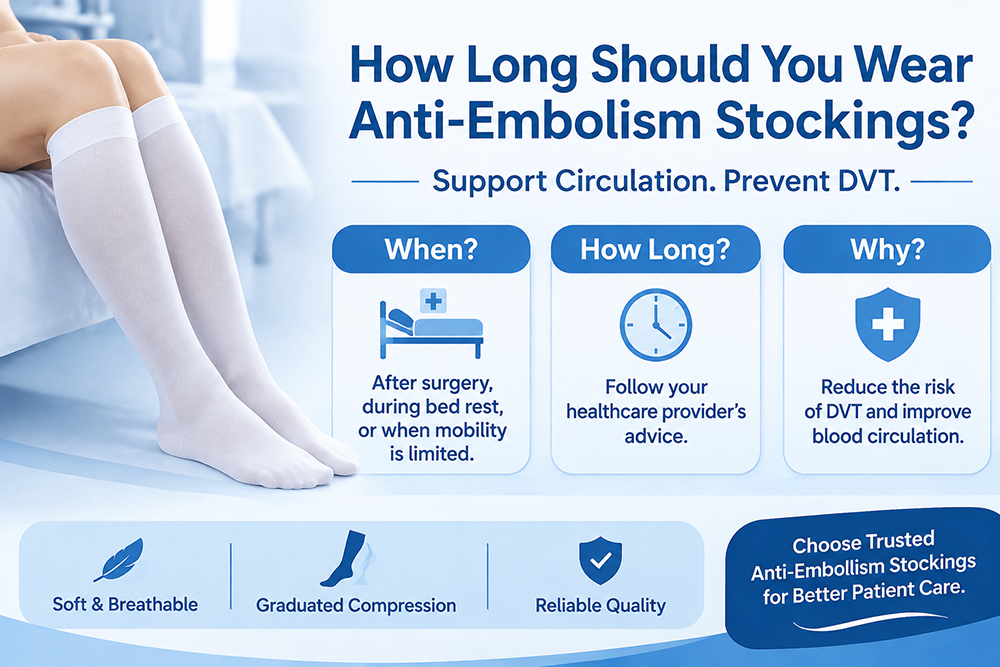 How Long Should You Wear Anti-Embolism Stockings?
 How Long to Wear Anti-Embolism Stockings After Surgery?
 Do Anti-Embolism Stockings Prevent Blood Clots?
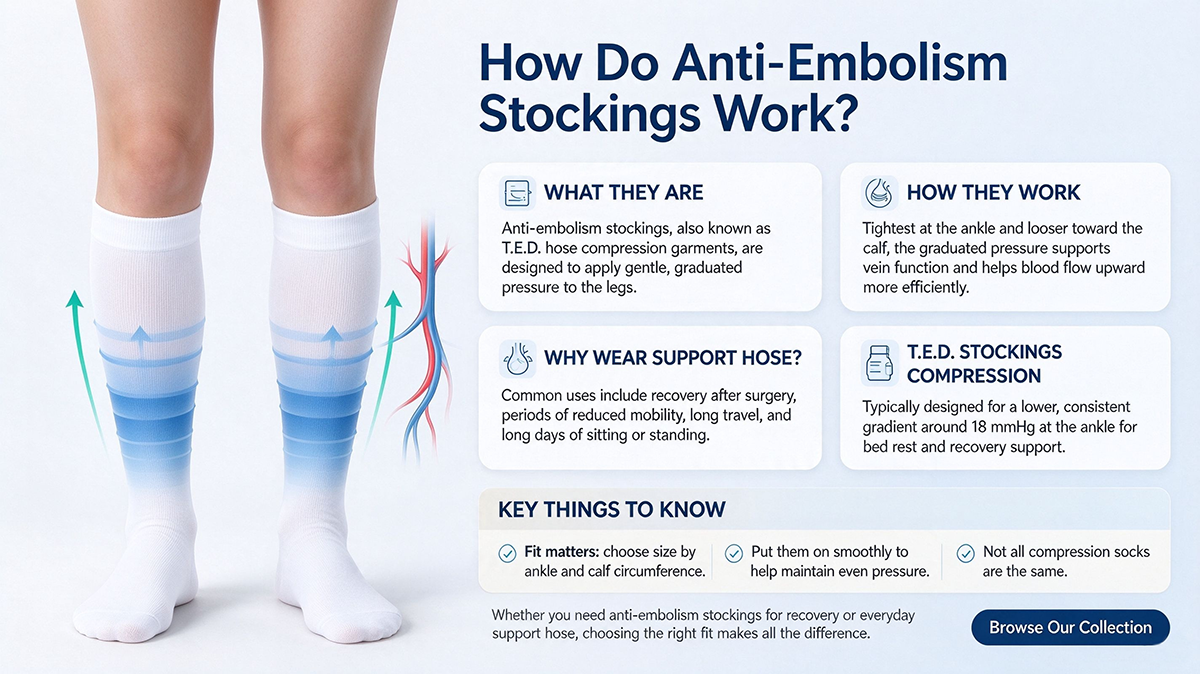 How Do Anti-Embolism Stockings Work?
 What Are Anti-Embolism Stockings Used For?
 What Are Anti-Embolism Stockings?
 What Are the Best Compression Socks for Travel and Walking?
 Are Compression Socks Good for Running and Exercise?
 What Compression Socks Should I Wear After Surgery?
 Are Compression Socks Good for Older Adults?
 What Are the Best Compression Socks for Nurses?
 Are Compression Socks Safe to Wear During Pregnancy?
 What Are the Best Compression Socks for Long Flights? | Rongrong Hosiery
 What Are the Best Compression Socks for Standing All Day?
 What Compression Level Do I Need for Varicose Veins? | Rongrong Hosiery
 Should I Choose Knee-High or Thigh-High Compression Socks? | Rongrong Hosiery
 What Size Compression Socks Do I Need?