
What Are Anti-Embolism Stockings Used For?
author: Jerry Guo
2026-10-30

After surgery, during a long hospital stay, or while recovering in bed, limited movement can slow blood flow in the legs. This is why healthcare professionals may recommend anti-embolism stockings as part of a recovery plan. But what exactly are they, how do they work, and how are they different from the compression or support hosiery people wear every day? This guide breaks it down in plain language.
What Are Anti-Embolism Stockings?
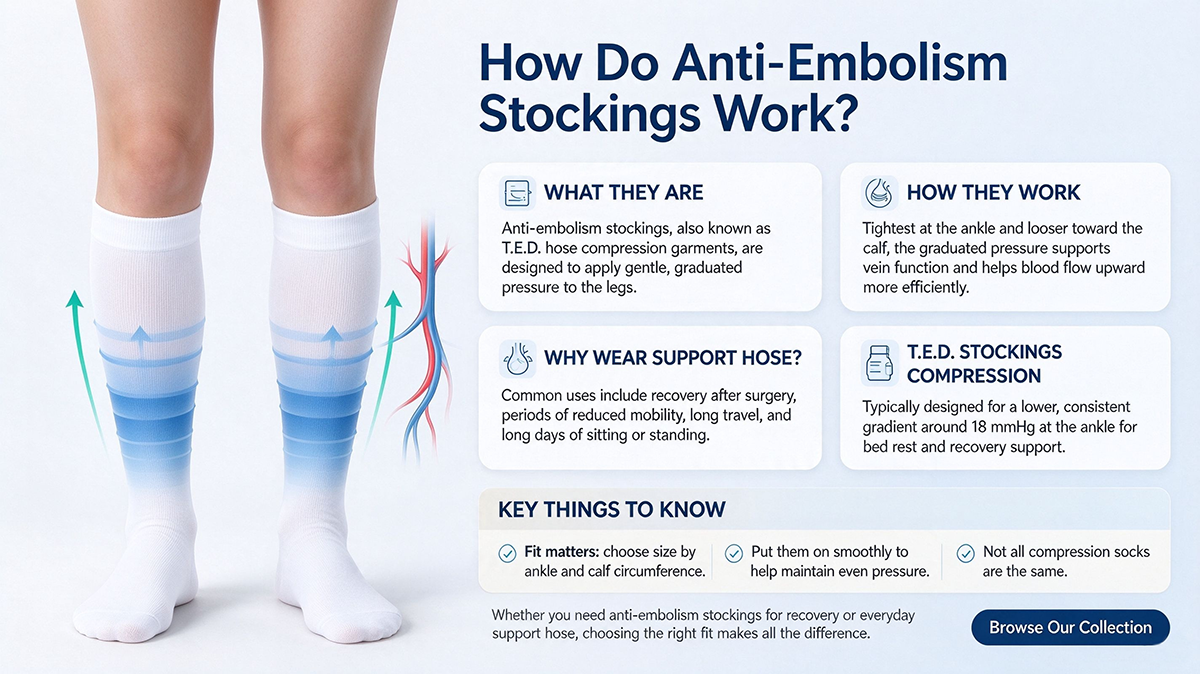
Anti-embolism stockings are specialized medical hosiery designed for patients with reduced mobility. They apply graduated compression — firmest around the ankle and gradually looser up the leg — to help venous blood flow return toward the heart while the wearer is mostly lying down or sitting.
-
Designed for bedrest and limited-mobility patients, not for walking or exercise.
-
Typically lower pressure than active-wear compression socks (often around 15–20 mmHg at the ankle).
-
Usually made with soft, breathable materials for extended, all-day wear.
-
Often available in open-toe styles so nurses can check circulation and skin color easily.
How Do They Work?
The graduated pressure pattern supports the deep veins and calf muscle pump while the patient is not actively moving. By gently squeezing the leg, they help reduce venous stasis — the pooling of blood in the lower legs that can occur during long periods of inactivity.
-
Ankle level: Highest pressure, supporting the smallest veins where pooling starts.
-
Calf level: Reduced pressure, guiding blood upward.
-
Thigh / knee level: Lightest pressure, keeping flow steady toward the heart.
Note: Anti-embolism stockings are not a guarantee against blood clots and are often used alongside other measures recommended by a healthcare team, such as medication, movement exercises, or intermittent pneumatic compression devices.
What Are They Used For?
If you have ever searched the use of TED stockings (TED stands for Thrombo-Embolic Deterrent), you will see the same core applications. Healthcare professionals may recommend them in the following situations:
-
After surgery — especially orthopedic, abdominal, or pelvic procedures where bed rest follows.
-
During a hospital stay — when a patient is confined to bed or a chair for long periods.
-
During recovery at home — while mobility is still limited after discharge.
-
Certain high-risk medical conditions — under professional assessment only.
They are not suitable for everyone. Patients with significant peripheral arterial disease, certain skin conditions, open wounds, or poor circulation in the feet may need a different approach. Proper measurement and professional guidance are essential.
What Are Compression Hose Used For?
Many shoppers ask "what are compression hose used for?" — and the answer is different from anti-embolism stockings. Compression hose (also called gradient compression stockings) are designed for active people who are on their feet or moving throughout the day.
-
Standing professions — nurses, teachers, retail workers, hospitality staff.
-
Long travel — long flights or drives where sitting is prolonged but walking resumes.
-
Sports and recovery — runners, cyclists, gym users who want muscle support during activity.
-
Everyday wellness — helping reduce leg tiredness and swelling after a long day.
Compression hose come in a wider range of pressure levels (15–20, 20–30, 30–40 mmHg) and are meant to be worn while upright. They are not a substitute for medically prescribed anti-embolism stockings during bedrest.
What Are Support Hose Used For?
Another common question is "what are support hose used for?" Support hose are the lightest, over-the-counter option. They provide gentle, even pressure rather than true graduated compression.
-
Everyday comfort — reducing mild tiredness in the legs during regular daily activities.
-
Light swelling — for general use, not for a diagnosed medical condition.
-
Fashion and appearance — often sold as sheer pantyhose or light knee-highs with a supportive feel.
-
Long working days — a light refresh for legs that feel heavy by the evening.
Support hose are not medical-grade. They should not replace compression stockings or anti-embolism stockings when a healthcare professional has prescribed a specific pressure level.
Quick Comparison: Anti-Embolism vs. Compression vs. Support Hose
|
Feature
|
Anti-Embolism Stockings
|
Compression Hose
|
Support Hose
|
|---|---|---|---|
|
Best for
|
Bedrest, post-surgery, limited mobility
|
Standing, sports, long travel, daily activity
|
Everyday light comfort
|
|
Pressure pattern
|
Graduated, lower mmHg range
|
Graduated, multiple mmHg levels
|
Light, even support
|
|
Worn while
|
Lying or sitting mostly
|
Upright and active
|
Regular daily movement
|
|
Available as
|
Knee-high, thigh-high, open-toe
|
Knee-high, thigh-high, pantyhose
|
Knee-high, pantyhose, sheer styles
|
|
Medical grade
|
Yes — prescribed for at-risk patients
|
Yes — with correct pressure level
|
No — general comfort only
|
Tips for Choosing and Wearing Them
-
Measure correctly — ankle, calf, and length measurements determine the right size; never guess.
-
Follow the recommended pressure — use the pressure level your healthcare team advises.
-
Check skin regularly — look for redness, irritation, or areas where the stocking is too tight.
-
Avoid folding or rolling — rolled tops can act as a tourniquet and reduce effectiveness.
-
Replace when worn out — stretch fibers lose compression over time.
If you notice new leg pain, swelling, redness, warmth, sudden shortness of breath, or chest pain, seek medical attention promptly.
Find Quality Hosiery at Rongrong Hosiery
At Rongrong Hosiery, we manufacture a full range of graduated compression and anti-embolism hosiery with 30 years of production experience. Our product line includes:
-
Anti-embolism stockings — knee-high and thigh-high, open-toe options for hospital and recovery use.
-
Graduated compression socks — 15–20 mmHg, 20–30 mmHg, and 30–40 mmHg grades for active and wellness use.
-
Support and fashion hosiery — comfortable everyday styles for retail and private label programs.
We support custom sizes, colors, and private label packaging, with technical documentation available for partners who require certification support. Whether you are a distributor, clinic supplier, or retail brand, we can help you find the right hosiery for your customers.
Disclaimer: This article is for general information only and does not replace professional medical advice. Always consult a qualified healthcare professional before using anti-embolism or compression hosiery, especially after surgery or with existing medical conditions.
 How to Put On Anti-Embolism Stockings Correctly?
 How to Measure for Anti-Embolism Stockings?
 Anti-Embolism Stockings vs Compression Socks: What's the Difference?
 Can You Sleep or Walk in Anti-Embolism Stockings?
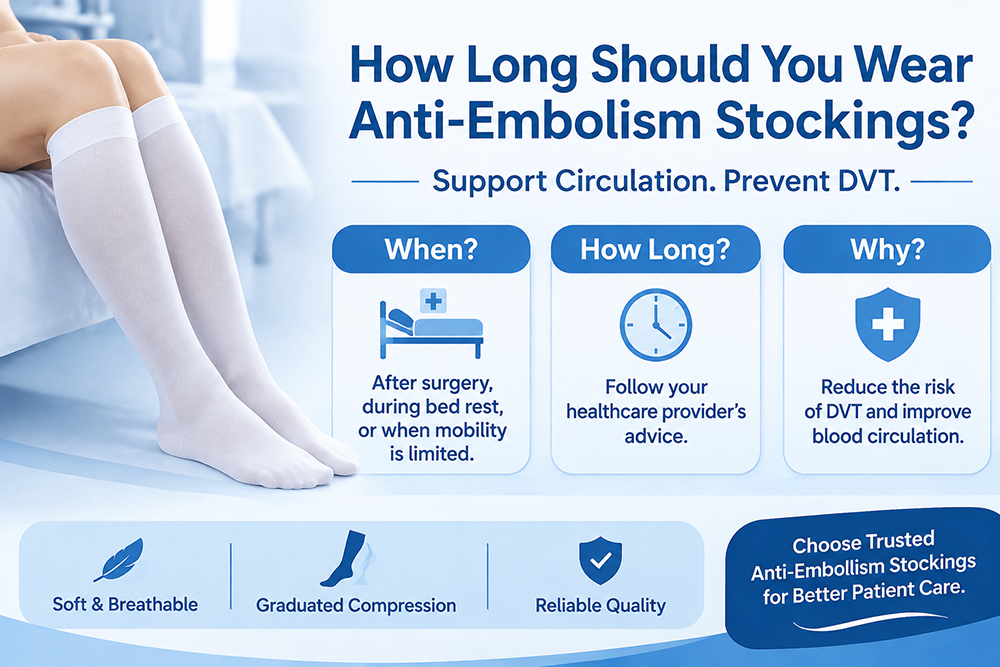 How Long Should You Wear Anti-Embolism Stockings?
 How Long to Wear Anti-Embolism Stockings After Surgery?
 Do Anti-Embolism Stockings Prevent Blood Clots?
 How Do Anti-Embolism Stockings Work?
 What Are Anti-Embolism Stockings?
 What Are the Best Compression Socks for Travel and Walking?
 Are Compression Socks Good for Running and Exercise?
 What Compression Socks Should I Wear After Surgery?
 Are Compression Socks Good for Older Adults?
 What Are the Best Compression Socks for Nurses?
 Are Compression Socks Safe to Wear During Pregnancy?
 What Are the Best Compression Socks for Long Flights? | Rongrong Hosiery
 What Are the Best Compression Socks for Standing All Day?
 What Compression Level Do I Need for Varicose Veins? | Rongrong Hosiery
 Should I Choose Knee-High or Thigh-High Compression Socks? | Rongrong Hosiery
 What Size Compression Socks Do I Need?