
Can You Sleep or Walk in Anti-Embolism Stockings?
author: Jerry Guo
2026-11-07

Two questions land in our inbox almost every week: can you sleep in anti-embolism stockings, and can you walk while wearing them? The short answer is yes to both. The longer answer depends on why the stockings were prescribed, how well they fit, and who is supervising the wear.
Can You Sleep in Anti-Embolism Stockings?
Usually not overnight in hospital settings, but night wear is not automatically wrong:
-
Most protocols remove them at night. Many hospitals take TED stockings off overnight so staff can inspect the skin, let patients wash, and reapply them in the morning.
-
Some patients are advised to keep them on. If someone is bed-bound or travelling with very limited mobility, a clinician may recommend wearing them through the night.
-
The decision is clinical. Circulation, skin condition, arterial history and the reason for compression all matter more than comfort alone.
-
If you do sleep in them: smooth every wrinkle and rolled edge first, and check the toes for warmth and colour.
Can You Walk in Anti-Embolism Stockings?
Yes, and walking is actively encouraged: movement engages the calf muscle pump, which graduated compression is designed to support.
-
Wear non-slip footwear. Stocking fabric is slippery on smooth hospital floors, so slippers or shoes with grip reduce fall risk.
-
Expect firmness at the ankle. Graduated compression is tightest at the ankle and lighter up the leg; that pressure is normal, not a sign of the wrong size.
-
Start with short, frequent walks, especially in the first days after surgery when stamina returns slowly.
-
Smooth bunching behind the knee before you continue walking.
When Do You Wear Compression Socks?
The answer is broader than most people expect:
-
During and after hospital stays, when immobility raises clot risk.
-
After surgery, for the duration set by the surgical team.
-
On long flights, bus or car journeys, and long desk sessions.
-
During pregnancy, or for daily management of tired, heavy, swollen legs.
-
For jobs that involve standing still for hours.
-
Practical habit: put them on in the morning before swelling builds, and remove them for bathing and skin checks as advised.
Wearing TED Stockings: Fit Comes Before Everything
Compression only works when the fit is right. A stocking that is too small feels tighter but may restrict circulation instead of supporting it.
-
Measure ankle circumference, calf circumference and leg length, then match the manufacturer's size chart.
-
Roll the stocking down to the heel, slide the foot in, and ease it up gradually instead of pulling from the toe.
-
Smooth every wrinkle at the ankle and behind the knee; folds concentrate pressure in the wrong places.
-
Wash daily in mild detergent, rinse well, and air dry away from direct heat.
-
Replace the pair once elasticity fades or the silicone band stops holding position.
TED Stockings Post Op: What to Expect
After surgery, stockings are often fitted before swelling peaks, then the routine settles into a pattern:
-
Continuous wear is common in the first days, shifting to daytime wear as mobility returns.
-
Staff typically check skin, toes and stocking position several times a day.
-
Report numbness, tingling, colour change, unusual pain, blistering, or a stocking that keeps rolling down.
-
Do not stop wearing them early on your own; the duration is usually set by the surgical team.
-
Keep follow-up appointments, because fit may need rechecking once swelling changes.
Choose a Stocking That Matches the Protocol
For distributors and clinics, consistency matters as much as compression level. Our anti-embolism range covers knee-high and thigh-high styles in 18 mmHg graduated compression, with colour-coded sizing, open-toe options, latex-free yarns and soft silicone bands. Private label, custom packaging and size-chart support are available for hospital and home-care programmes.
Final Word
Anti-embolism stockings are flexible tools: you can sleep in them when a clinician advises it, and you should walk in them whenever you can. What decides the outcome is fit, skin inspection and the original prescription. If you are sourcing for a hospital or retail programme, ask us for the size chart and specification sheet first.
 How to Put On Anti-Embolism Stockings Correctly?
 How to Measure for Anti-Embolism Stockings?
 Anti-Embolism Stockings vs Compression Socks: What's the Difference?
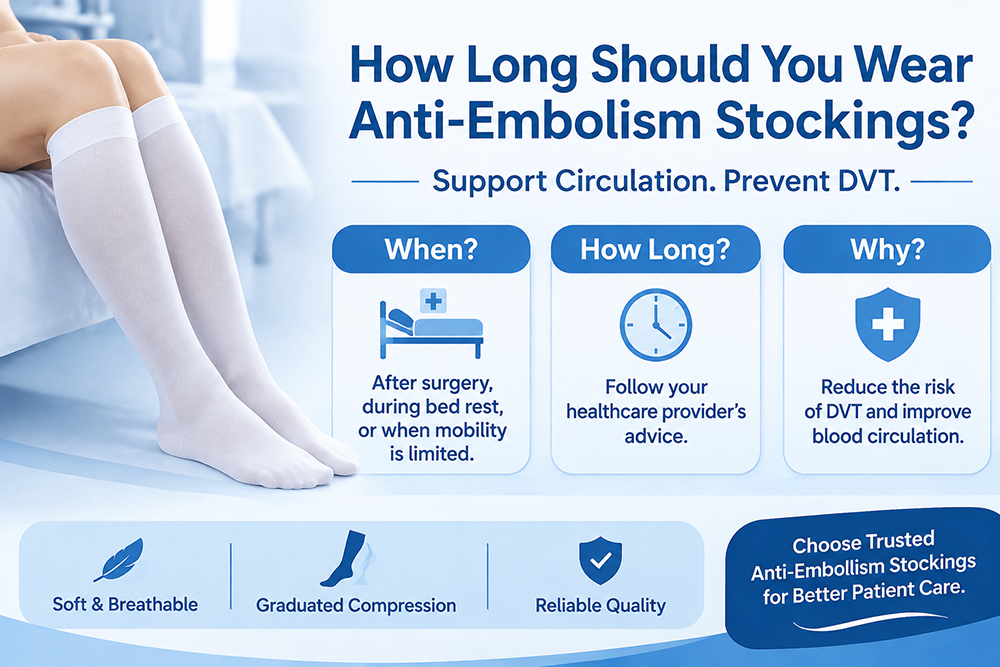 How Long Should You Wear Anti-Embolism Stockings?
 How Long to Wear Anti-Embolism Stockings After Surgery?
 Do Anti-Embolism Stockings Prevent Blood Clots?
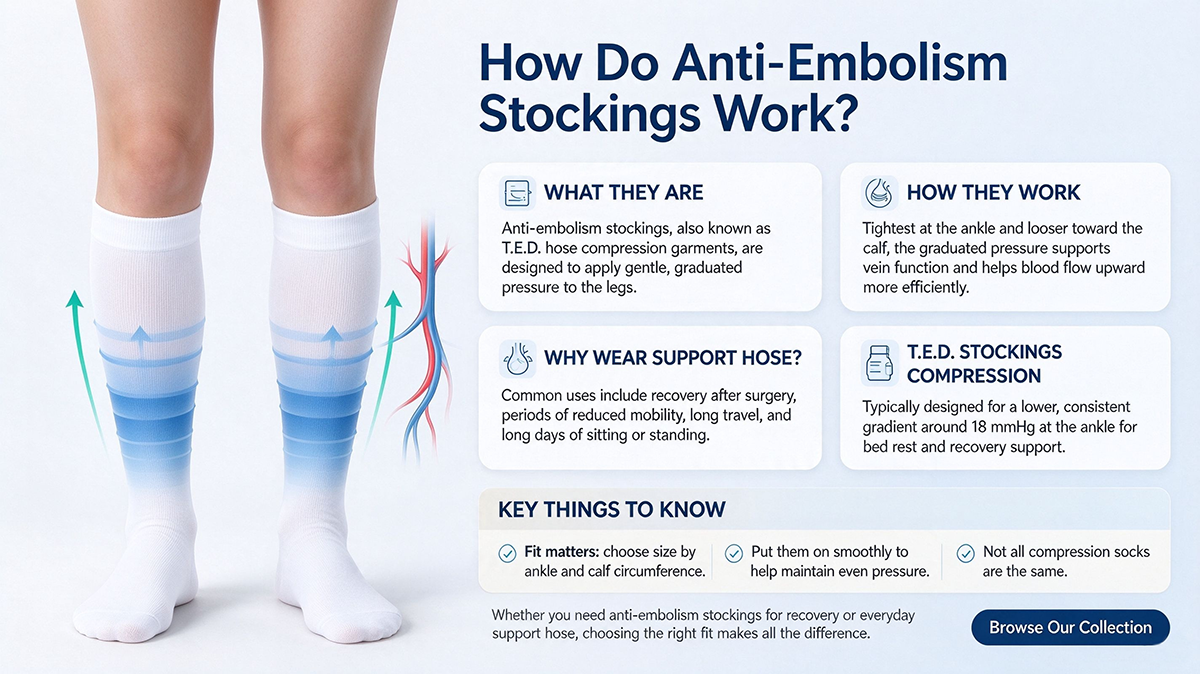 How Do Anti-Embolism Stockings Work?
 What Are Anti-Embolism Stockings Used For?
 What Are Anti-Embolism Stockings?
 What Are the Best Compression Socks for Travel and Walking?
 Are Compression Socks Good for Running and Exercise?
 What Compression Socks Should I Wear After Surgery?
 Are Compression Socks Good for Older Adults?
 What Are the Best Compression Socks for Nurses?
 Are Compression Socks Safe to Wear During Pregnancy?
 What Are the Best Compression Socks for Long Flights? | Rongrong Hosiery
 What Are the Best Compression Socks for Standing All Day?
 What Compression Level Do I Need for Varicose Veins? | Rongrong Hosiery
 Should I Choose Knee-High or Thigh-High Compression Socks? | Rongrong Hosiery
 What Size Compression Socks Do I Need?