
How Do Anti-Embolism Stockings Work?
author: Jerry Guo
2026-11-02
If you have ever spent time in a hospital or recovery setting, you may have heard about T.E.D. hose. But what exactly are anti-embolism stockings, and how do they support healthy circulation? Below is a clear, simple breakdown.
1. What Are Anti-Embolism Stockings?
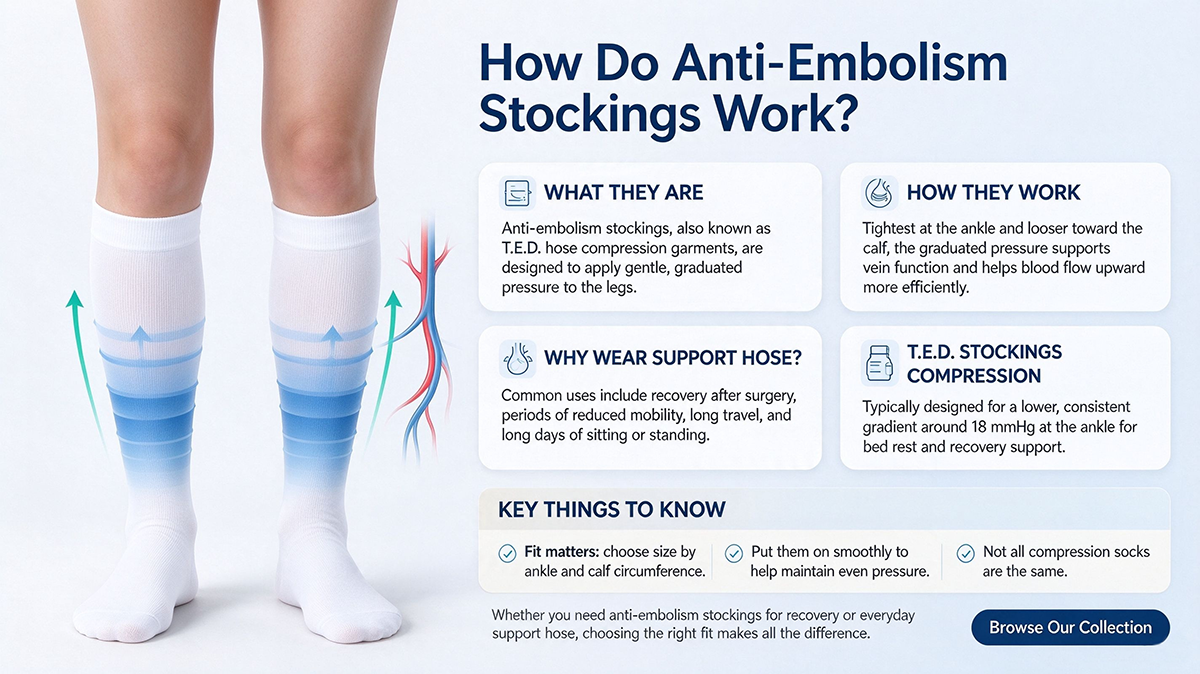
Anti-embolism stockings, commonly known as T.E.D. hose compression garments, are specially designed socks that apply gentle, graduated pressure to the legs. They are typically used by people who are less mobile or recovering from surgery, when leg movement is limited.
2. How Do They Work?
-
Graduated pressure: The sock is tightest at the ankle and gradually loosens as it moves up the leg.
-
Supports vein function: This gradient helps veins move blood upward toward the heart more efficiently.
-
Reduces pooling: By supporting healthy blood flow, they help reduce fluid buildup and heaviness in the lower legs.
3. Why Wear Support Hose?
Many people wonder: why wear support hose if you already feel fine? Here are the most common reasons:
-
During recovery or periods of reduced mobility
-
After surgery or while staying in bed for extended periods
-
For long travel, when sitting still for hours can leave legs feeling heavy
-
For people who stand or sit for long workdays and want extra leg support
4. T.E.D. Stockings Compression: The Basics
When people search for T.E.D. stockings compression, they usually want to understand the pressure level. Anti-embolism hose typically offer a lower, consistent gradient (around 18 mmHg at the ankle), designed for bed rest and recovery rather than high-performance athletic use.
5. Key Things to Know
-
Fit matters: Proper sizing based on ankle and calf circumference is essential for effective support.
-
Put them on correctly: Smooth out wrinkles so pressure is even across the leg.
-
Not all compression socks are the same: Anti-embolism hose, everyday support socks, and athletic compression socks serve different needs.
Ready to Explore?
Whether you are looking for anti-embolism stockings for recovery or everyday support hose for long days on your feet, choosing the right fit makes all the difference. Browse our collection of graduated compression socks designed for comfort, support, and everyday wear.
 How to Put On Anti-Embolism Stockings Correctly?
 How to Measure for Anti-Embolism Stockings?
 Anti-Embolism Stockings vs Compression Socks: What's the Difference?
 Can You Sleep or Walk in Anti-Embolism Stockings?
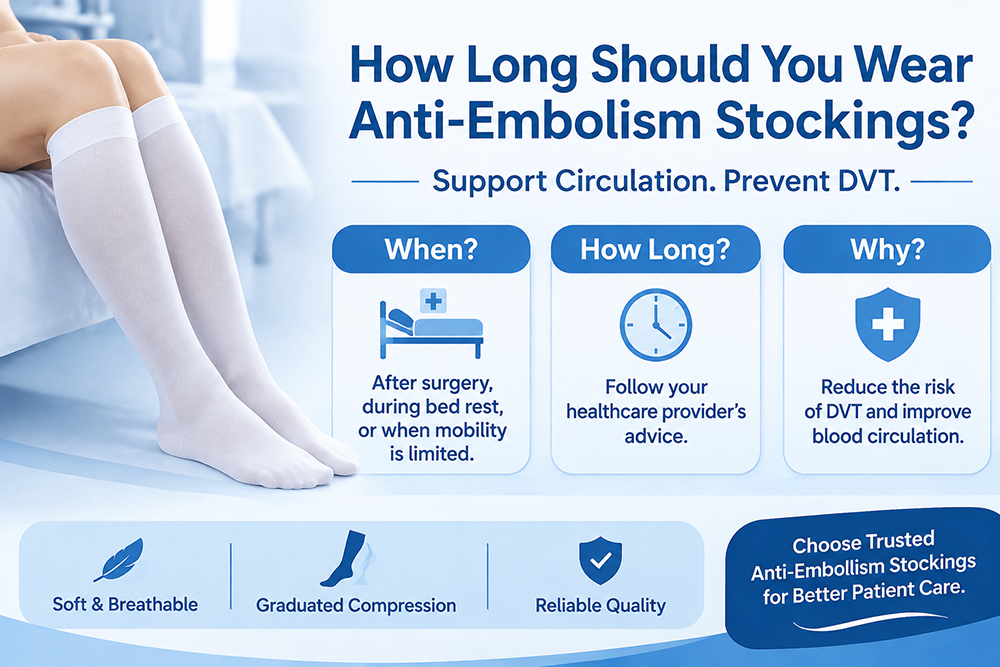 How Long Should You Wear Anti-Embolism Stockings?
 How Long to Wear Anti-Embolism Stockings After Surgery?
 Do Anti-Embolism Stockings Prevent Blood Clots?
 What Are Anti-Embolism Stockings Used For?
 What Are Anti-Embolism Stockings?
 What Are the Best Compression Socks for Travel and Walking?
 Are Compression Socks Good for Running and Exercise?
 What Compression Socks Should I Wear After Surgery?
 Are Compression Socks Good for Older Adults?
 What Are the Best Compression Socks for Nurses?
 Are Compression Socks Safe to Wear During Pregnancy?
 What Are the Best Compression Socks for Long Flights? | Rongrong Hosiery
 What Are the Best Compression Socks for Standing All Day?
 What Compression Level Do I Need for Varicose Veins? | Rongrong Hosiery
 Should I Choose Knee-High or Thigh-High Compression Socks? | Rongrong Hosiery
 What Size Compression Socks Do I Need?