
Do Anti-Embolism Stockings Prevent Blood Clots?
author: Jerry Guo
2026-11-03

Anti-embolism stockings, commonly known as TED stockings, are a widely used medical compression garment designed to support healthy venous circulation. Here is a quick overview:
How They Work?
-
Apply graduated compression — tightest at the ankle, gradually decreasing up the leg
-
Help improve blood flow in the deep veins of the lower legs
-
Reduce venous stasis (blood pooling) during periods of immobility
TED Stockings and DVT
-
Deep vein thrombosis (DVT) occurs when a blood clot forms in a deep vein, usually in the leg
-
TED stockings are commonly used as part of VTE prophylaxis (venous thromboembolism prevention)
-
Typically prescribed during hospitalization, post-surgery, or prolonged bed rest
-
They are used alongside other preventive measures — not as a standalone solution
DVT and TED Stockings: Who Should Use Them
-
Post-operative patients (orthopedic, abdominal, or pelvic surgery)
-
Individuals on prolonged bed rest or limited mobility
-
Long-distance travelers with known risk factors
-
Always consult a healthcare professional for proper sizing and indication
Compression Socks for Pulmonary Embolism
-
A pulmonary embolism (PE) occurs when a DVT clot breaks loose and travels to the lungs
-
By helping reduce DVT formation risk, compression stockings support overall VTE prevention
-
They are part of a broader strategy that may include early mobilization, hydration, and doctor-prescribed medication
-
Compression garments do not treat an existing PE — seek immediate medical care for chest pain, shortness of breath, or coughing up blood
Key Considerations
-
Proper sizing is essential for effectiveness
-
Put them on in the morning before swelling builds up
-
Inspect skin regularly and check for correct fit
-
Not suitable for everyone — contraindications include certain arterial conditions, severe neuropathy, and open wounds
Bottom Line
Anti-embolism stockings are an important component of VTE prevention protocols in clinical settings. When used correctly under medical guidance, they help support healthy venous circulation and reduce the risk associated with prolonged immobility.
 How to Put On Anti-Embolism Stockings Correctly?
 How to Measure for Anti-Embolism Stockings?
 Anti-Embolism Stockings vs Compression Socks: What's the Difference?
 Can You Sleep or Walk in Anti-Embolism Stockings?
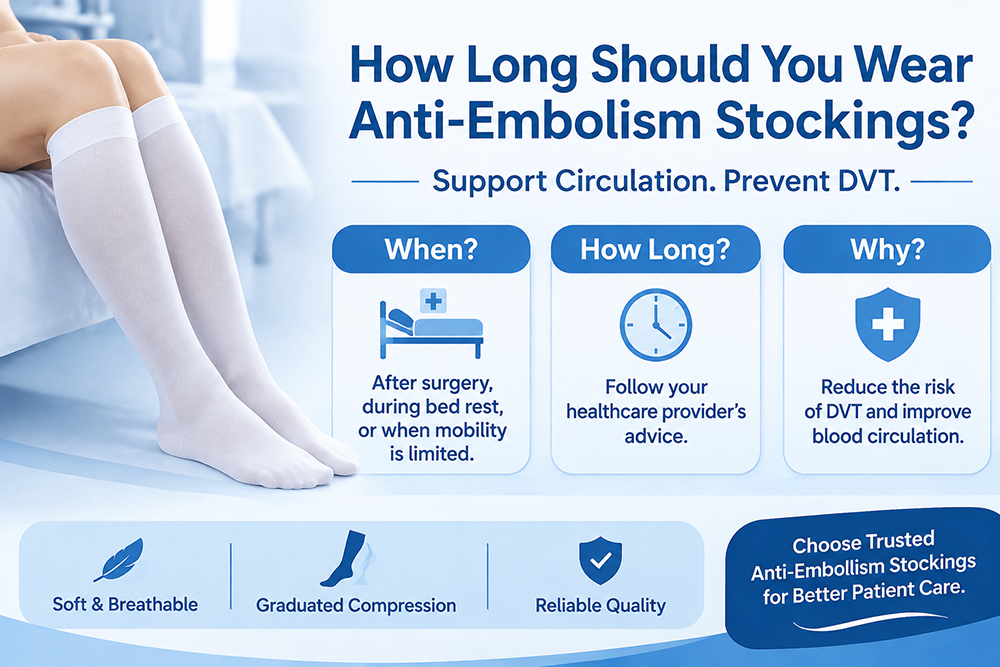 How Long Should You Wear Anti-Embolism Stockings?
 How Long to Wear Anti-Embolism Stockings After Surgery?
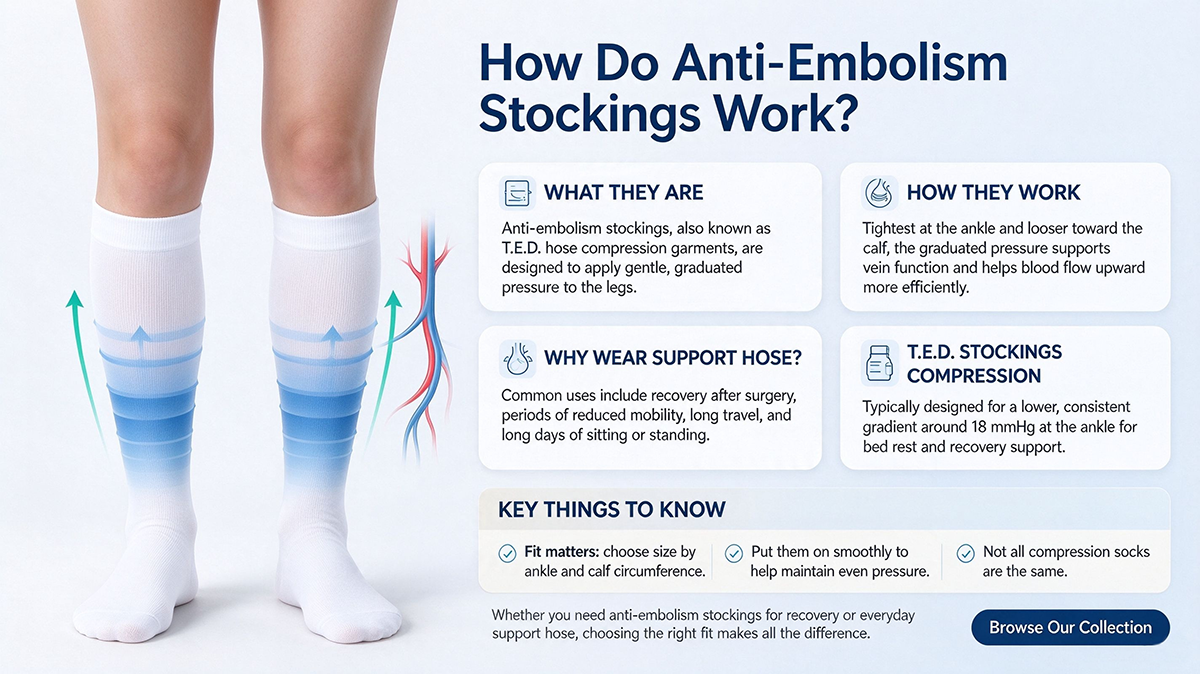 How Do Anti-Embolism Stockings Work?
 What Are Anti-Embolism Stockings Used For?
 What Are Anti-Embolism Stockings?
 What Are the Best Compression Socks for Travel and Walking?
 Are Compression Socks Good for Running and Exercise?
 What Compression Socks Should I Wear After Surgery?
 Are Compression Socks Good for Older Adults?
 What Are the Best Compression Socks for Nurses?
 Are Compression Socks Safe to Wear During Pregnancy?
 What Are the Best Compression Socks for Long Flights? | Rongrong Hosiery
 What Are the Best Compression Socks for Standing All Day?
 What Compression Level Do I Need for Varicose Veins? | Rongrong Hosiery
 Should I Choose Knee-High or Thigh-High Compression Socks? | Rongrong Hosiery
 What Size Compression Socks Do I Need?