
Is 30–40 mmHg Too Much for Varicose Veins?

If you have varicose veins, you may wonder whether 30–40 mmHg compression is too strong. The answer depends on your symptoms, circulation, leg condition, and the compression system used in your country.
Although many systems rate 30–40 mmHg as firm or extra-firm, it is not always “too much.” Still, this strength is typically best chosen with proper professional guidance, not by automatically picking the highest level.

1. What Does 30–40 mmHg Mean?
mmHg stands for millimeters of mercury, and compression socks or stockings use it to describe the pressure they provide.
A 30–40 mmHg product provides substantially stronger compression than 15–20 or 20–30 mmHg. In graduated compression products, pressure is strongest at the ankle. It gradually decreases up the leg and supports venous return.
For this reason, 30–40 mmHg compression socks are usually seen as medical-grade, firm compression. They are not everyday light-support socks.
2. Can 30–40 mmHg Help Varicose Veins?
Yes, 30–40 mmHg compression may suit some people with more severe venous problems or varicose veins.
This is especially true when lower compression levels do not provide enough support.
Clinical compression guidelines use different classification systems, so the exact “class” corresponding to 30–40 mmHg can vary. Some European standards, for example, place approximately 34–46 mmHg in Class 3.
The important point is that you should not automatically consider stronger compression better.
3. When Might 30–40 mmHg Be Considered?
A healthcare professional may consider stronger compression when a person has:
- More pronounced varicose veins
- Significant leg swelling
- Chronic venous insufficiency
- Venous-related skin changes
- Insufficient response to lower compression
For some patients with severe varicose veins, higher compression classes may be considered when lower levels are not sufficient.

4. 30–40 mmHg vs. 20–30 mmHg
For many users, the real question is not whether 30–40 mmHg is “too much,” but whether they actually need it.
CompressionTypical PositionCommon Consideration15–20 mmHgLight–ModerateEveryday support20–30 mmHgModerateVaricose veins, swelling30–40 mmHgFirmMore significant venous problems
Compression levels and medical classes vary by country. Always check the product specification and local clinical guidance.
5. Choosing the Right 30–40 mmHg Compression Stockings
If you recommend 30–40 mmHg compression, fit and construction matter just as much as the pressure level.
Look for:
- Graduated compression
- Accurate sizing
- Consistent pressure performance
- Dense, durable knitting
- Comfortable top band
- Knee-high or thigh-high options according to the area requiring support
- Open-toe options when easier foot access is preferred
A properly fitted medical compression product should feel firm and supportive, not painfully tight. Incorrect sizing or bunching can interfere with circulation.
6. Is 30–40 mmHg Right for Everyone?
No. A higher compression level is not automatically suitable for everyone.
People with certain circulation problems, including peripheral artery disease, may need special assessment before using strong compression. If compression causes significant pain, numbness, tingling, skin discoloration or other concerning symptoms, stop and seek medical advice.
For this reason, people considering 30–40 mmHg compression stockings for varicose veins should choose a pressure level. They should base it on their condition and professional advice.
7. Final Takeaway
So, is 30–40 mmHg too much for varicose veins?
Not necessarily. Selected users can find this compression level appropriate, especially when clinicians indicate a need for stronger support. However, you should not choose higher compression simply because it sounds more effective.
The right combination of compression level, graduated pressure, accurate sizing and comfortable construction is what makes a medical compression product effective and wearable.
For brands, distributors, and healthcare suppliers, we make 20–30 mmHg and 30–40 mmHg medical compression socks. We offer knee-high, thigh-high, and open-toe options. We also provide OEM/ODM services and private-label customization.
Looking for a reliable medical compression sock manufacturer? Contact us for product specifications, samples and wholesale solutions.
 Compression classes explained: 8-15, 15-20, 20-30, 30-40 mmHg
  What does 30-40 mmHg compression mean?
  What is the difference between 15-20 and 20-30 mmHg?
  Which Compression Class Should I Choose?
  What Compression Level Is Best for Varicose Veins?
  Best Compression Socks for Varicose Veins:20-30 mmHg Guide
  Support Socks for Varicose Veins-How Do They Help?
  Do Compression Stockings Reduce Varicose Veins?
 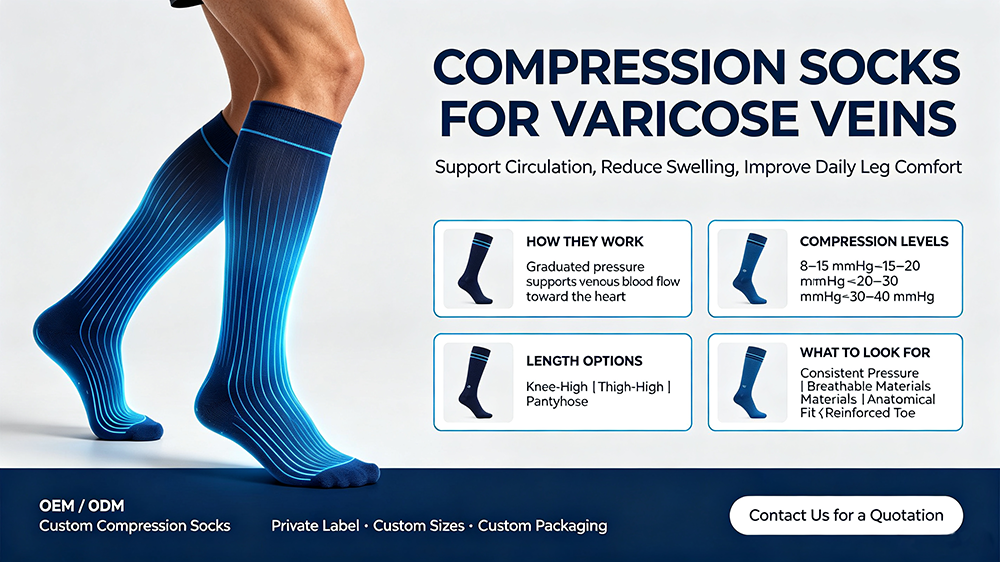 Do Compression Socks Help Varicose Veins?
  TED Anti-Embolic Stocking Sizing and Measurement Guide
 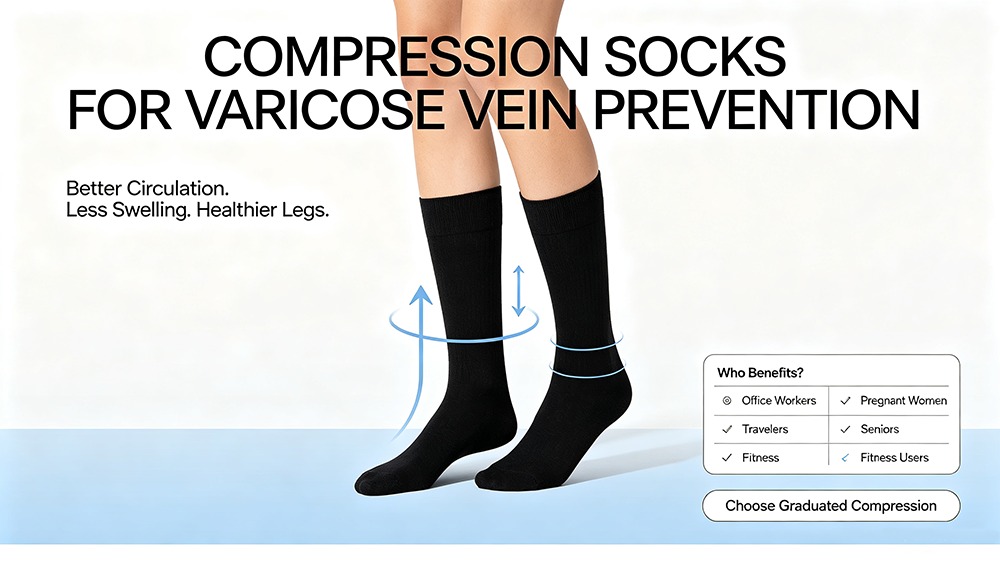 Can Compression Socks Prevent Varicose Veins? The Truth & Proven Benefits
  When is the best time of day to wear compression socks?
 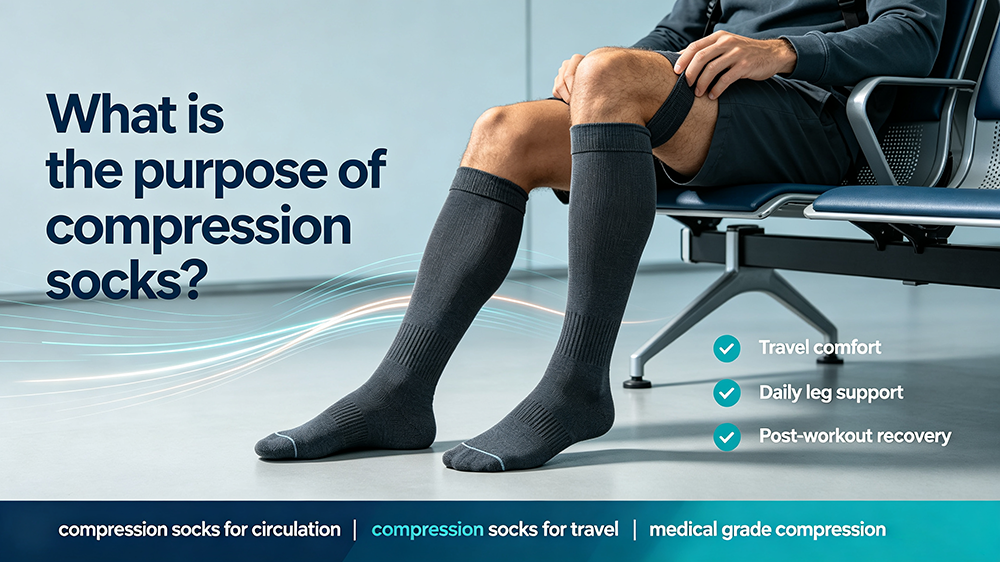 What is the purpose of the compression socks?
  When Should You Not Wear Compression Socks?
 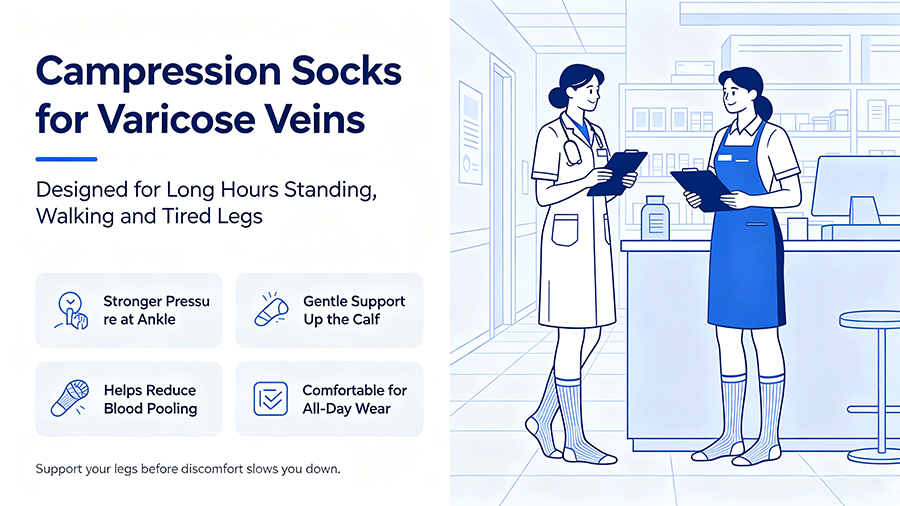 Will Compression Socks Help Varicose Veins?
  Medical Compression Socks Manufacturer & OEM Partner
  Why Nurses Wear Compression Socks: Benefits for Long Hours Standing?
  Medical Compression Socks Manufacturer with 30 Years of Manufacturing Experience
  Compression Socks for Athletes: Recovery Benefits After Training
  Best Compression Socks for Running: Do They Really Improve Performance?